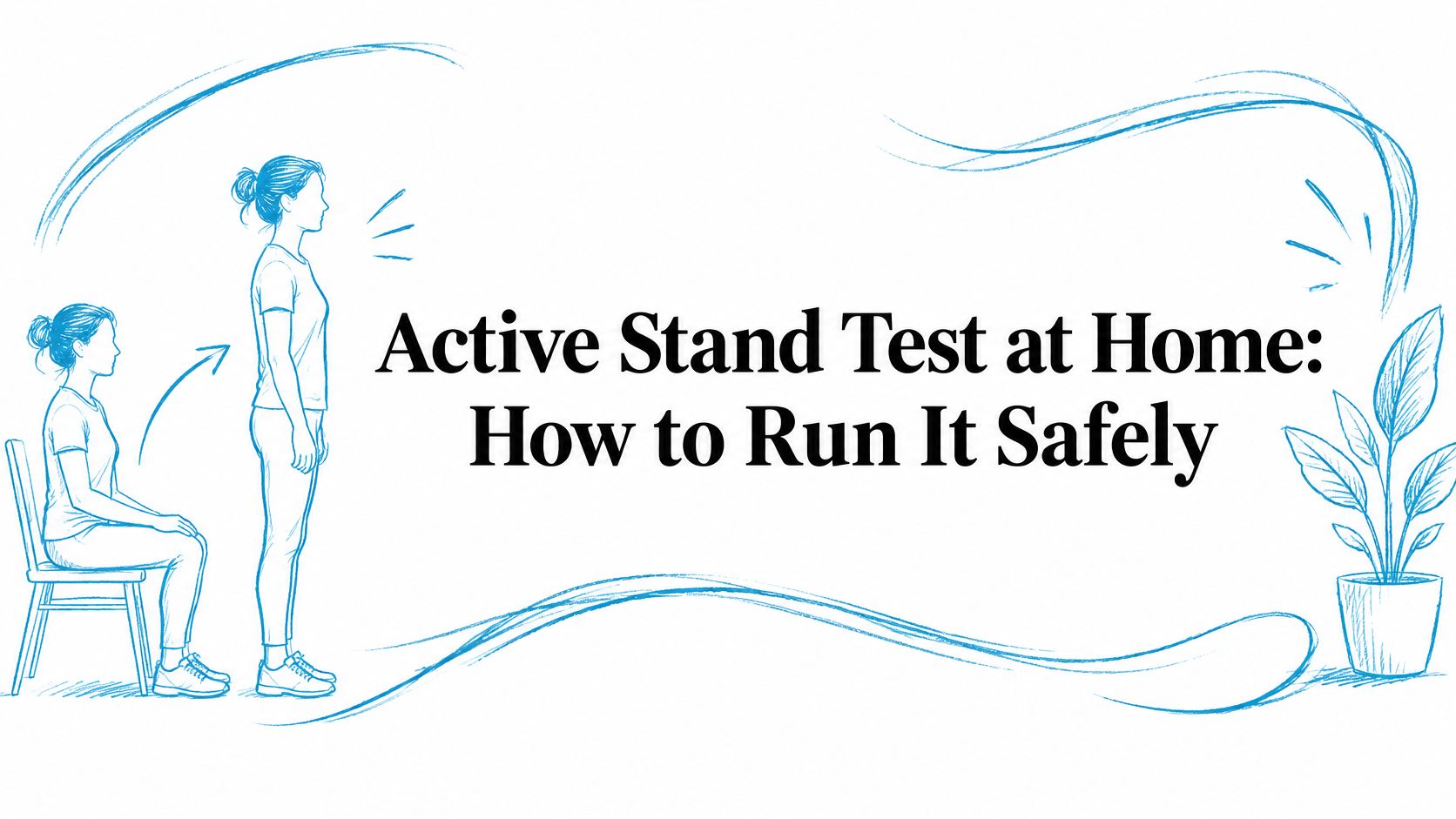
Active Stand Test at Home: How to Run It Safely
Learn how to run the active stand test at home safely, read heart-rate rises of 30 or 40 bpm, and know when to see a clinician.
Product updates and notes on tracking POTS with Cardiogram.
Learn how to run the active stand test at home safely, read heart-rate rises of 30 or 40 bpm, and know when to see a clinician.
Learn what to track in a symptom journal for POTS, how to link entries to heart-rate episodes, and how to share it with your clinician.

Compare the best smartwatch for heart rate options by accuracy, sampling, battery and HealthKit support, plus how to pick one for POTS or dysautonomia.

Learn what to record in a heart rate log, how to capture baselines and standing rises, and how to export it for your clinician.
Learn how to run a POTS test at home with an active stand: thresholds, step-by-step timing, safety stop rules and how to log results for your doctor.

Learn the 8 most common POTS triggers, from dehydration and heat to medications and poor sleep, with practical ways to manage each one and track patterns.

Learn what a pots flare up feels like, why your heart races, which triggers matter, and how to ease an episode safely at home.
POTS brain fog is common, often daily, and not always tied to the biggest heart-rate spike. Learn triggers, tracking, and what to tell your clinician.

Learn what the Apple Health heart rate app tracks, how accurate Apple Watch readings are, and when to add a dedicated monitoring app.

Find the best accurate weight scale with an error budget, a home test, and a clear line between weight and body-fat estimates.
What is dysautonomia symptoms? See the body-system signs, POTS heart-rate rules, and what to log before a visit.
Learn POTS syndrome symptoms in adults: heart-rate rules, daily patterns, look-alikes, and what to track before a visit.
Automatic episode detection, symptom notes, trends, and cardiologist-ready PDF reports in one private app.