A sudden heartbeat spike can feel alarming, but the safest first response is to stay calm, check for chest pain, shortness of breath, fainting, or severe dizziness, and record what happened. Palpitations have many possible causes, and in one primary-care review, 31% of cases were linked to psychosomatic causes, while atrial fibrillation accounted for 16% and supraventricular tachycardia for 10% in the primary-care review.
You may be seated when your heart suddenly thumps hard, flutters, or seems to race. The sensation may stop before you can decide whether to call someone, leaving you frightened and unsure how to describe it later. Knowing what to do when you get palpitations means handling two separate tasks: deciding whether you need urgent help, then preserving useful information if the episode settles.
Understanding Your Heartbeat Reaction
Maya notices a heavy beat while answering emails. She stops, checks her pulse, and feels it jump again. Within seconds, worry takes over: What if something is seriously wrong? Her breathing becomes shallow, her muscles tighten, and the heartbeat feels even more noticeable.
That feedback loop is real. Stress can heighten your awareness of normal or temporary changes, while fear can add physical sensations of its own. This doesn't mean you should dismiss palpitations as anxiety. The primary-care review linked above found psychosomatic causes in 31% of cases, but it also identified cardiac rhythms and medical conditions among the possible explanations. A new or recurring symptom still deserves sensible assessment.

Start with a deliberate pause
Sit down if you can. If you're driving, exercising, or standing in a place where you could fall, stop and move somewhere safe. Take a slow breath, then ask yourself three questions:
- What does it feel like? Is it a flutter, a skipped beat, pounding, or a fast regular rhythm?
- What was happening first? Note whether you were resting, standing, walking, exercising, upset, dehydrated, or recently exposed to caffeine, nicotine, medication, or another possible trigger.
- How do you feel overall? Check for chest discomfort, breathlessness, faintness, confusion, or severe dizziness.
A short episode after stress or a stimulant may be harmless, but the sensation alone can't establish the cause. Caffeine, dehydration, anemia, thyroid disease, medicines, and rhythm disturbances can all belong in the diagnostic conversation. Learning how the sympathetic and parasympathetic nervous system affects body sensations may also help you understand why fear and heartbeat awareness can reinforce each other.
Practical rule: Calm yourself enough to assess the episode, but don't use calmness as a reason to ignore warning signs.
If the sensation ends, resist the urge to remember it vaguely and move on. Write down the time, what you were doing, how long it seemed to last, and every symptom that occurred with it. That small record can be more useful at an appointment than a general statement that your heart “felt weird.”
Recognizing Emergency Warning Signs
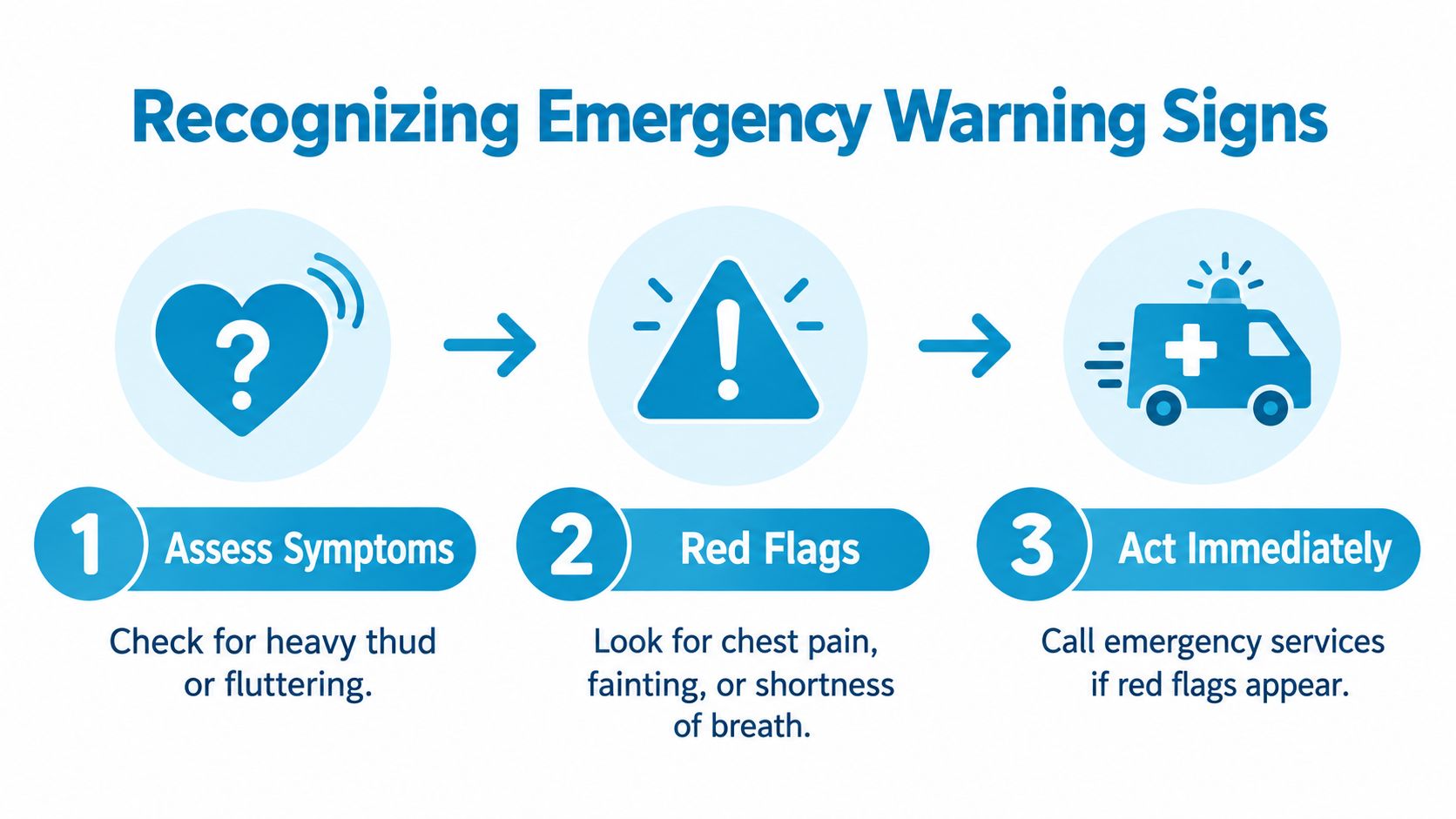
The decision is not based only on how fast your heart feels. Palpitations with certain symptoms require emergency help, especially when the episode is continuing. NHS guidance advises calling emergency services when ongoing palpitations occur with chest pain, shortness of breath, or fainting in its emergency guidance.
Use this simple split:
Call for emergency help
Call emergency services immediately if palpitations are accompanied by:
- Chest pain or tightness, particularly if it feels severe or unusual.
- Shortness of breath, especially severe or sudden breathlessness.
- Fainting or near-fainting, blacking out, or feeling that you may lose consciousness.
- Marked dizziness or lightheadedness, particularly if you can't remain safely upright.
- Reduced alertness, acute low blood pressure symptoms, signs of heart failure, or concerning changes on an ECG if one is available.
If these symptoms are present, stop activity, sit or lie down safely, and don't try to manage the episode with home techniques first. Guidance for urgent assessment recommends immediate emergency-department transfer and cardiology referral when palpitations occur with syncope, ischemic chest pain, acute hypotension, heart-failure signs, decreased consciousness, or ischemic ECG changes in this clinical guidance.
Arrange medical assessment for non-emergency episodes
An episode that stops without red flags still matters if it keeps returning, lasts longer than usual, happens during exertion, or interferes with daily life. Arrange a clinical review rather than relying on reassurance from a wearable or a symptom search. An evaluation commonly begins with a history, physical examination, and a 12-lead ECG, followed by monitoring when the rhythm isn't captured during the visit.
The emergency-care data also show why persistent symptoms shouldn't be brushed aside. Palpitations account for about 5.8 of every 1,000 emergency-department visits, with an admission rate of 24.6%, and one emergency population study found a cardiac cause in 34% of patients in the clinical review. Those figures don't tell you what your episode means, but they support a careful response. For a plain-language description of rhythm sensations, see what tachycardia can feel like, while remembering that only clinical assessment can identify the cause.
Immediate Techniques for Calming an Episode
Once you've checked for emergency warning signs and feel stable, focus on safety and observation rather than forcing the heartbeat to stop. Sit or lie down, loosen restrictive clothing, and avoid standing quickly. Slow breathing can reduce the added surge of panic, but it isn't a substitute for medical care.
Try breathing in gently through your nose and making the exhale longer than the inhale. Keep your shoulders relaxed and avoid taking repeated, very large breaths, which can make you feel lightheaded. Continue for several cycles while observing whether the sensation changes, and stop if breathing makes you feel worse.
A cautious vagal maneuver
For a hemodynamically stable episode that resembles narrow-complex supraventricular tachycardia, a vagal maneuver may be considered. The classic Valsalva maneuver involves:
- Get positioned: Sit or lie down so you won't fall.
- Take a breath: Inhale normally.
- Create pressure: Blow against a closed glottis, as if trying to exhale while your airway is closed, for about 10 to 15 seconds. Some clinical instructions describe a range extending to 10 to 30 seconds.
- Recover: Relax and breathe normally while observing what happens.
A modified version adds a leg raise after the strain phase. Clinical references describe vagal stimulation as an acute intervention for stable palpitations or SVT-like episodes in this clinical resource. Because the technique is intended for a specific stable rhythm pattern, don't use it to delay emergency help, and don't assume that a fast or irregular sensation is suitable for self-treatment.
Support your body without overcorrecting
Take small sips of water if dehydration may be relevant and you can drink safely. Don't suddenly consume large amounts of salt or change prescribed medication without professional advice. Avoid additional caffeine, nicotine, recreational substances, and strenuous activity while you're deciding what to do.
A heart-rate number from a watch can add context, but it doesn't diagnose an arrhythmia. If the episode continues, worsens, or develops any red flag, stop home measures and seek urgent care. For broader background on heart-rate patterns, HRV training is a separate topic and shouldn't be used as a treatment plan for unexplained palpitations.
Tracking Episodes for Better Diagnosis
The most useful moment may come after the pounding stops. That's when you can capture details before memory turns a vivid event into a vague sentence. “My heart raced yesterday” gives a clinician little to work with. “It began while I was standing after breakfast, lasted several minutes, peaked on my watch, and came with dizziness but no chest pain” creates a much clearer starting point.
Record the same fields every time
Use a note, symptom diary, or health-tracking application. Record:
- Time and setting: Include when the episode began, where you were, and whether you were resting, standing, walking, or exercising.
- Pattern: Describe pounding, fluttering, skipped beats, or a fast regular rhythm.
- Duration: Record the approximate start and stop time, even if the estimate isn't exact.
- Associated symptoms: Note dizziness, breathlessness, chest discomfort, faintness, fatigue, or brain fog.
- Possible triggers: Include sleep, hydration, meals, caffeine, nicotine, stress, illness, medications, and salt intake when relevant.
- What changed it: Note whether sitting, lying down, slow breathing, or a vagal maneuver appeared to affect the episode.
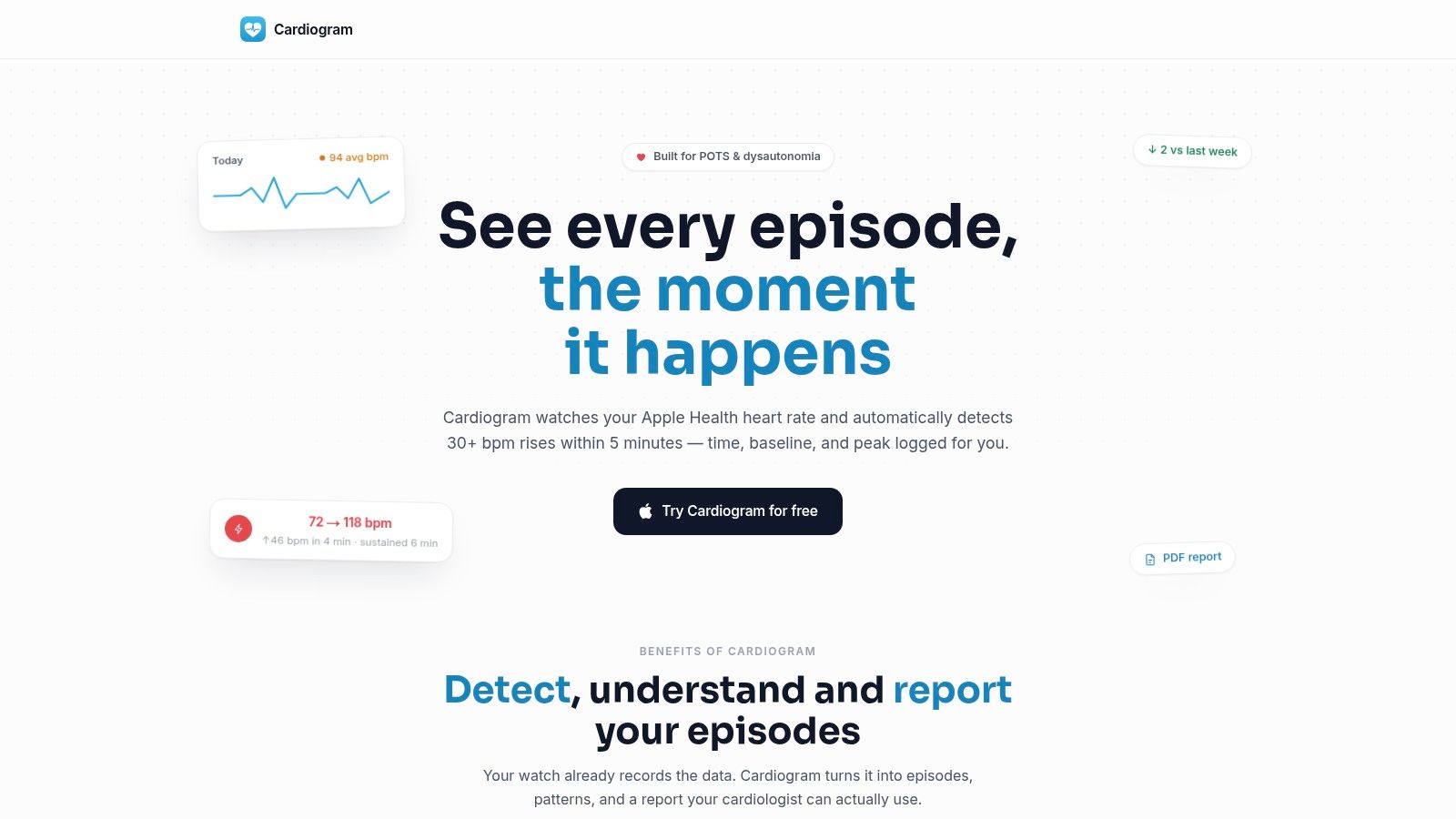
Objective data can complement these notes. A useful monitoring system may identify an episode's baseline, peak, sustained duration, and time of occurrence, while context-aware filtering can keep exercise and recovery periods separate from unexplained events. Cardiogram analyzes heart-rate data from Apple Health, can organize tachycardic episodes and related symptoms, and provides a timeline for reviewing patterns.
Why context beats a single reading
One isolated heart-rate value can't explain what your body was doing. A sequence showing what happened before, during, and after the sensation is more informative, particularly when the episode is recurrent and the cause remains unclear. Clinician guidance notes that ambulatory monitoring is often used to capture the rhythm during an event, and that 2-week ambulatory ECG monitoring has the highest diagnostic yield-to-cost ratio when the cause is unclear in this review.
Don't treat an app's detection as a diagnosis. Treat it as an organized record that can help a clinician decide whether you need an ECG, ambulatory monitor, blood tests, medication review, or another evaluation.
Preparing Data for Your Clinician
A good appointment file should answer four questions quickly: when episodes happen, what they look like, what occurs alongside them, and what pattern connects them. Bring your symptom notes together with available heart-rate records instead of showing a collection of unrelated screenshots.
Review the entries before your appointment. Mark the episodes that occurred at rest, after standing, during exertion, or around a possible trigger. Look for repeated associations, such as symptoms appearing with poor sleep or dizziness, but present them as observations rather than conclusions. Your clinician may find that the pattern points toward different testing from the one you expected.
Build a concise appointment summary
A practical summary can include:
- A short symptom description: Explain whether you feel pounding, fluttering, skipped beats, or rapid regular beats.
- The timeline: List the first episode you remember, recent changes, and the most representative events.
- The episode record: Include start time, duration, peak or observed heart-rate information, activity, posture, and associated symptoms.
- Relevant background: Mention known heart conditions, family history, recent illness, medication changes, stimulant use, hydration concerns, and exertional symptoms.
- Your central question: Ask what rhythm needs to be ruled out and whether ambulatory monitoring would help capture an event.
If your tracking system can create a clinician-ready report, check that it explains how episodes were detected and separates symptom context from automated findings. A report that states its criterion and summarizes episodes and trends is easier to discuss than a raw graph with no labels. Keep the original notes too, since a clinician may ask about an entry that doesn't fit the broader pattern.
Don't stop prescribed medicine because a log seems to connect it with palpitations. Show the timing to the prescriber and ask what to do. Also tell the clinician if episodes happen with faintness, chest pain, severe breathlessness, or exercise, even if those details occur infrequently.
The aim isn't to prove a diagnosis yourself. It's to give the healthcare professional enough organized information to choose the next safe step and avoid guessing from memory alone.
Next Steps for Ongoing Heart Health
After an episode, return to a repeatable routine: check for red flags, write down the event, preserve available heart-rate data, and arrange review when episodes recur or remain unexplained. Keep tracking consistent rather than recording only the most frightening events, because ordinary days provide useful context too.
At your next appointment, bring your timeline, medication list, trigger notes, and questions. If hydration, salt intake, standing symptoms, or dysautonomia are part of your history, record them consistently and discuss any changes with your clinician instead of making large adjustments independently.
Use this checklist:
- During symptoms: Stop, sit safely, and assess emergency warning signs.
- After symptoms: Record timing, duration, posture, triggers, and associated symptoms.
- Before review: Organize the record and identify recurring patterns.
- At the appointment: Ask whether ECG or ambulatory monitoring is appropriate.
Cardiogram organizes Apple Health heart-rate data into episodes, trends, symptom context, and an exportable report for clinical discussions. If you're using an Apple Watch and want a clearer record of unexplained tachycardia or palpitations, visit Cardiogram and review how its tracking fits into your care plan.