A resting heart rate above 100 beats per minute is commonly called tachycardia in adults, and it often feels like a racing, pounding, or fluttering heartbeat. You may also notice dizziness, shortness of breath, fatigue, chest discomfort, or a feeling that your heart is beating unusually hard.
You might be sitting still when your heartbeat suddenly becomes impossible to ignore. Perhaps it seems to thump against your chest, flutter in your throat, or speed up after you stand. You check your watch, worry about the number, and then wonder whether anxiety caused the sensation or whether something is happening with your heart rhythm.
That uncertainty is understandable. The feeling alone can't reliably tell you how serious an episode is. Tachycardia can be a temporary response to stress, exertion, or illness, but it can also reflect an arrhythmia or a posture-related pattern such as POTS. The useful clues are the sensation, the timing, the trigger, the rhythm pattern, and any symptoms that occur alongside it.
Recognizing the Everyday Experience of a Racing Heart
You are dressing for the day when your heartbeat suddenly feels impossible to ignore. It may race in your chest, pound against your ribs, or pulse visibly in your neck. Some people sense fluttering or vibration. Others notice a single heavy thump, a pause, or a beat that seems to send a wave through the body.
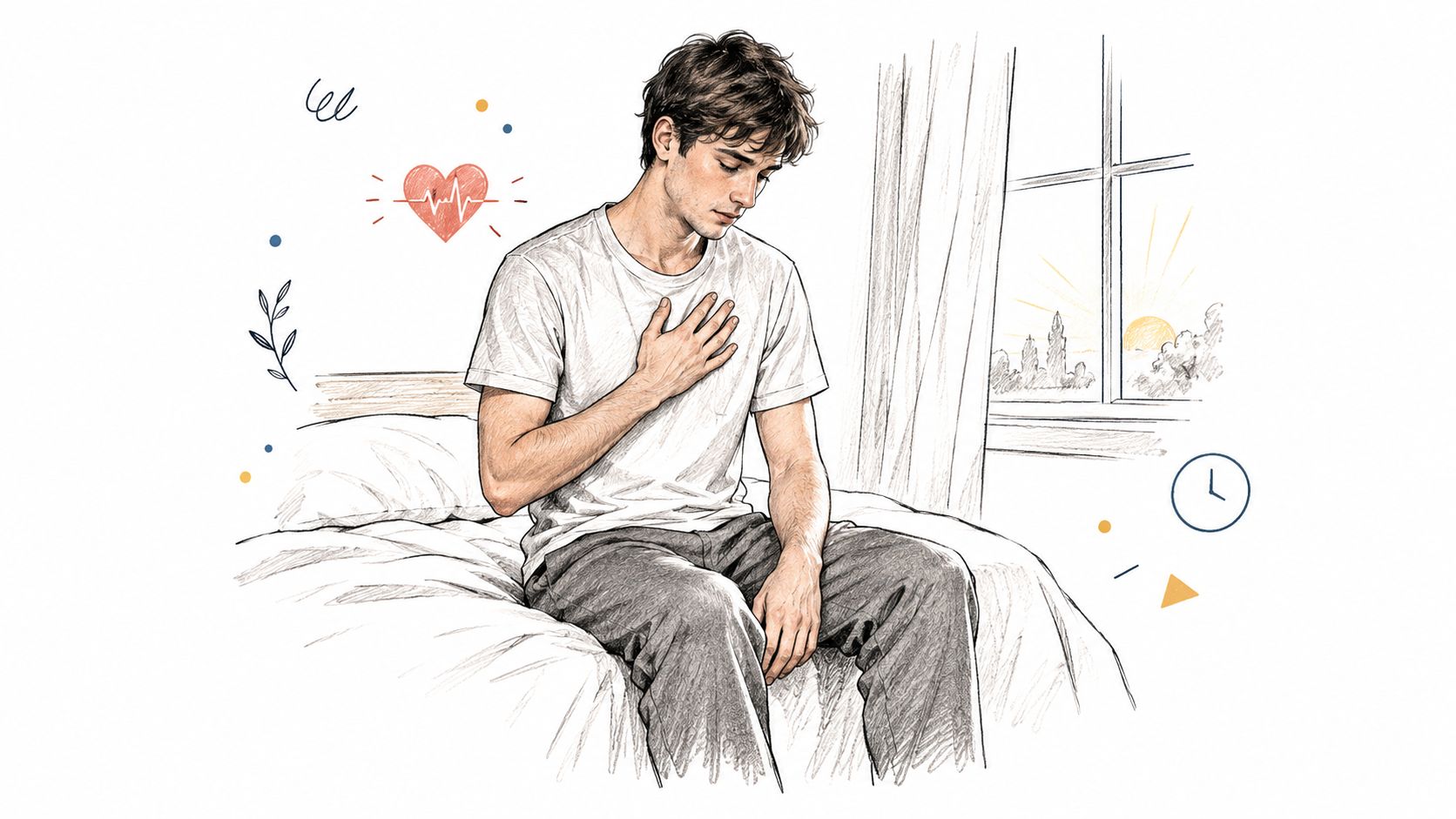
An episode can pass quickly or last long enough to disrupt ordinary activities. You may become aware of each beat while lying in bed, sitting still, or trying to sleep. A noticeable pulse in the throat or neck, chest pressure, breathlessness, weakness, lightheadedness, dizziness, fatigue, or a feeling of impending fainting can occur alongside it. These symptoms are described in Healthdirect's overview of tachycardia symptoms.
The heartbeat may feel fast, hard, or irregular
“Fast” describes only one part of palpitations. In a validation study of arrhythmia symptoms, 87.1% of patients who reported palpitations said their heart felt fast, 72.1% felt it beating harder than usual, 40.7% noticed an irregular beat, and 23.6% felt skipped beats.
Those findings help explain why people with similar heart-rate readings can describe very different experiences. One person may feel a steady, rapid rhythm. Another may notice forceful beats in an uneven sequence. Someone else may feel little or nothing, even while a monitor records a faster rhythm.
Practical rule: Describe the sensation precisely. “Fast and regular after standing” gives a clinician different information from “irregular thumps that began while resting.”
Context adds meaning to the sensation. A heartbeat that rises during exercise fits a different pattern from one that suddenly accelerates while you are lying down. Repeated episodes after standing may point toward a posture-related response, such as POTS, while palpitations during fear or worry may reflect the body's stress response. The feeling alone cannot distinguish anxiety from an arrhythmia.
Record what you were doing, whether the change was sudden or gradual, how long it lasted, and whether sitting or lying down altered it. Also note whether the rhythm seemed regular and which symptoms appeared with it. These details connect a subjective sensation to a clinical pattern, giving a clinician more useful information than a heart-rate number alone.
Understanding Tachycardia From a Medical Perspective
A resting adult heart rate above 100 beats per minute meets the clinical definition of tachycardia. A typical resting adult rate falls between 60 and 100 beats per minute, according to Healthdirect's clinical explanation of tachycardia. The threshold gives clinicians a starting point, not a complete explanation of what you are feeling.
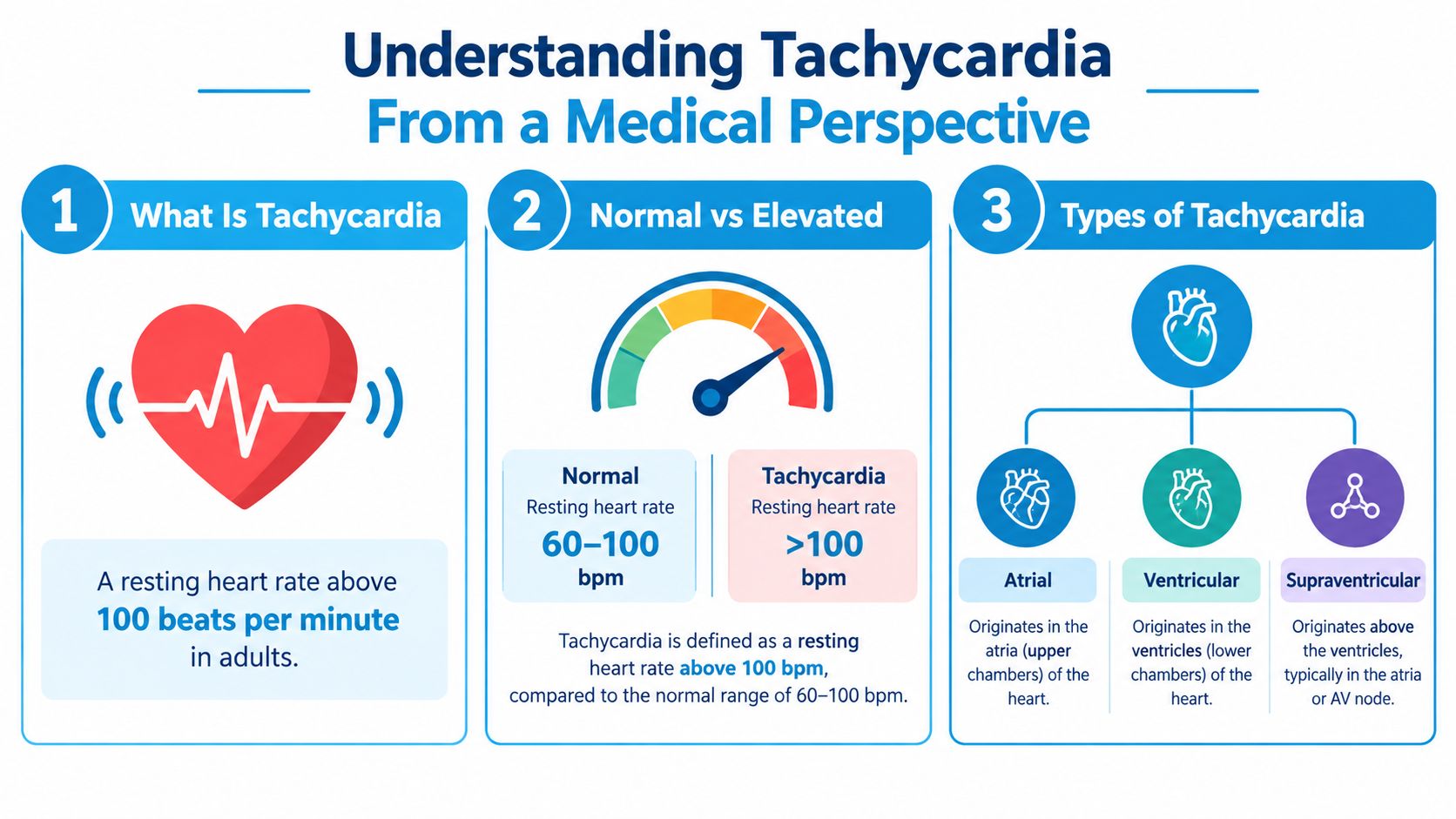
A monitor shows how fast the heart beats. It does not show by itself whether the rhythm is regular, where it starts, what triggered it, or how well the heart fills between beats. Clinicians therefore interpret the number alongside the timing, rhythm, symptoms, and surrounding circumstances.
Why the sensation varies
A rapid rhythm can leave less time for the heart to fill before the next contraction. If blood flow becomes less effective, you may experience lightheadedness, weakness, breathlessness, chest discomfort, or a feeling that you might faint. Mayo Clinic's discussion of tachycardia symptoms describes these sensations alongside racing or pounding beats. The same physical feeling can arise from different mechanisms, so a pounding heart during fear does not prove an arrhythmia, while a quieter episode does not rule one out.
The rhythm's category adds another layer. Supraventricular tachycardia, or SVT, begins above the ventricles and represents one important type. A 2010 review in American Family Physician reported an SVT incidence of 35 per 100,000 person-years and prevalence of 2.29 per 1,000 people. It also found that atrioventricular nodal reentrant tachycardia accounts for about 50% to 60% of adult SVT cases.
Those population figures cannot determine your personal risk. They illustrate why tachycardia is a description, not one diagnosis. An electrocardiogram or longer monitoring may be needed to distinguish sinus tachycardia, SVT, atrial tachycardia, ventricular tachycardia, and other rhythms.
Benign Versus Concerning Tachycardia Symptoms
A fast heartbeat isn't automatically dangerous. Your pulse normally responds to physical effort and emotional strain, and an episode may settle when the trigger passes. What matters is the overall pattern and whether your circulation appears affected.
| More reassuring pattern | More concerning pattern |
|---|---|
| Begins after exertion or an obvious stress response | Begins suddenly without a clear trigger |
| Eases as you rest | Continues or repeatedly returns while resting |
| No chest pressure, fainting, or severe breathlessness | Chest pressure, severe breathlessness, confusion, or fainting |
| You remain alert and steady | You feel close to passing out or can't stay upright |
This comparison isn't a diagnosis. A mild sensation can still deserve medical attention, and an intense sensation doesn't always indicate a dangerous rhythm. Some arrhythmias are barely noticeable, while a strong normal stress response can feel dramatic.
When symptoms need urgent attention
Seek urgent medical care if a racing heartbeat occurs with chest pressure or pain, severe shortness of breath, fainting, near-fainting, confusion, or marked weakness. A fast rhythm accompanied by dizziness or loss of consciousness is especially important because it may indicate that the heart isn't maintaining effective circulation during the episode.
If you're unsure whether an irregular sensation could be atrial fibrillation, you can review general symptom context in this guide to whether atrial fibrillation can be felt. Don't use symptom matching to rule out a serious problem.
For episodes without red flags, arrange a routine medical appointment when they keep recurring, interfere with sleep or daily activities, or appear without an understandable trigger. Keep a record rather than trying to judge each event from memory.
- Timing: Write down when the episode began and ended.
- Position: Note whether you were lying, sitting, standing, or walking.
- Associated symptoms: Record dizziness, breathlessness, chest discomfort, weakness, or faintness.
- Possible context: Include stress, illness, caffeine, dehydration, medication changes, or exercise.
Common Triggers and Underlying Conditions
Tachycardia can arise from a normal demand on the body, a problem outside the heart, or an electrical rhythm disturbance. Stress and anxiety can activate the body's alerting system, while exercise naturally increases the pulse. Dehydration, illness, standing quickly, heat, and medication effects may also make the heart beat faster.
The key is to look for repeatable context. If the sensation appears during a stressful conversation and gradually settles as you calm down, that pattern differs from an abrupt rhythm that starts and stops without warning. If it follows standing and includes lightheadedness or brain fog, posture may be an important clue.
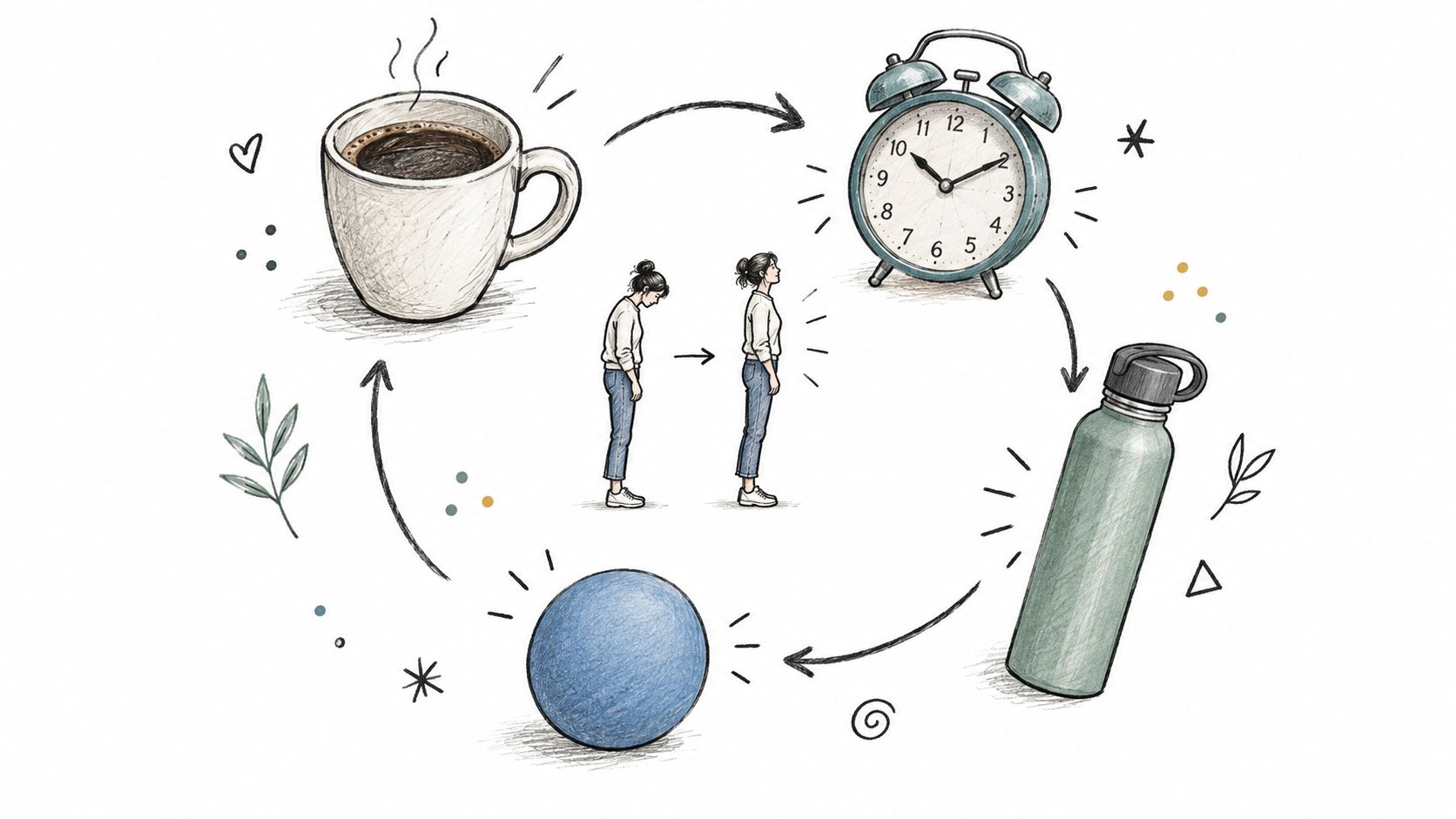
The posture-linked pattern in POTS
POTS is defined by a characteristic response to standing, rather than by any single sensation. In adults, the heart rate rises by at least 30 beats per minute within 10 minutes of standing. In adolescents, the threshold is at least 40 beats per minute, without major orthostatic hypotension, according to Johns Hopkins Medicine's POTS explanation.
People with POTS commonly report lightheadedness, palpitations, tremulousness, blurred vision, fatigue, and brain fog. During symptomatic episodes, standing heart rates are often around 120 beats per minute or higher, as described in the same clinical reference. The repeated connection with upright posture is more informative than one isolated high reading.
Don't assume that posture-linked symptoms are “just anxiety.” Anxiety can coexist with POTS, and the fear created by repeated episodes is understandable. A clinician can assess the pattern, check for other causes, and decide whether formal autonomic or cardiac testing is appropriate. You can also learn more about POTS and postural orthostatic tachycardia.
Connecting Sensations to Real-World Scenarios
A person stands up from bed and soon notices a pounding heart, blurred vision, weakness, and lightheadedness. The symptoms return on many mornings and improve after sitting or lying down. That repeated link with being upright points toward an orthostatic pattern, rather than a single response to stress.
Someone else feels a sudden, very rapid heartbeat while sitting at a desk. The rhythm feels regular, starts abruptly, and stops just as quickly. This pattern can occur with an episodic rhythm disturbance, so a clinician should assess it rather than treating it as ordinary stress or activity-related acceleration.
A third person notices fluttering during a frightening conversation. The pulse rises with the emotional reaction and settles as breathing and tension ease. That response may reflect the body's normal alert system. Episodes that recur without a clear trigger still warrant medical discussion.
Context turns a sensation into useful information
The word “pounding” can describe different physical events. During exercise, it may reflect a normal increase in heart rate and pumping force. Palpitations can also feel strong even when the rate is only mildly raised. With a very rapid rhythm that reduces effective filling, breathlessness, weakness, or dizziness may become more noticeable than the heartbeat itself.
Tachycardia may feel like racing, pounding, or fluttering, rather than appear as a high number on a monitor. Those sensations provide context, but they cannot identify the rhythm on their own. Anxiety can produce a similar feeling, while a posture-linked pattern may suggest an orthostatic condition such as POTS. The timing, trigger, body position, and accompanying symptoms help separate these possibilities.
A useful episode note could say: “It started while I was standing in the kitchen. My heart felt fast and forceful, followed by lightheadedness and brain fog. Lying down helped.” This gives a clinician more to work with than “my heart raced again.” Record what you felt, what you were doing, and how your body responded.
When to Seek Medical Attention and Next Steps
Seek urgent help for tachycardia with chest pressure, severe shortness of breath, fainting, near-fainting, confusion, or severe weakness. If symptoms are happening now and feel serious, don't drive yourself. Contact local emergency services.
For recurring but less urgent episodes, schedule a medical evaluation. Bring a log that includes heart rate readings, body position, duration, symptoms, recent illness, hydration, medication changes, and what stopped the episode. If the episodes are brief or unpredictable, ask whether ambulatory cardiac monitoring could capture the rhythm during everyday life.
If you use an Apple Watch, Cardiogram can analyze heart-rate data from Apple Health, identify tachycardic episodes, connect them with logged symptoms and triggers, and create a report for clinical review. It isn't a diagnosis, but organized episode information can help you and your clinician discuss patterns more clearly.
Don't try to diagnose yourself from a single reading. A qualified clinician can interpret the rhythm, examine possible causes, and decide whether you need cardiac, autonomic, or other testing.
Cardiogram helps people with unexplained tachycardia, palpitations, dizziness, or suspected POTS turn Apple Watch heart-rate history into structured episodes, symptom context, trends, and clinician-ready reports. Visit Cardiogram to learn how it can support more informed conversations about what your racing heart feels like and when it happens.