You stand up from the couch and your heart suddenly seems to sprint. Your vision feels unsteady, your chest pounds, and within minutes you're exhausted. Sitting back down helps, but the pattern keeps returning while showering, cooking, waiting in line, or walking across a room.
That experience can feel random, especially when a routine checkup doesn't capture it. Postural orthostatic tachycardia syndrome, or POTS, is a disorder of circulation and autonomic regulation that can make ordinary upright activities surprisingly difficult. The key to understanding it isn't only learning a diagnostic threshold. It's learning how posture, symptoms, timing, and heart-rate data fit together.
Understanding What POTS Means for Daily Life
POTS belongs to a group of conditions called orthostatic intolerance, meaning symptoms appear or worsen when someone is upright and may ease after lying down. The name describes the pattern: postural refers to body position, orthostatic refers to standing, and tachycardia refers to a raised heart rate.
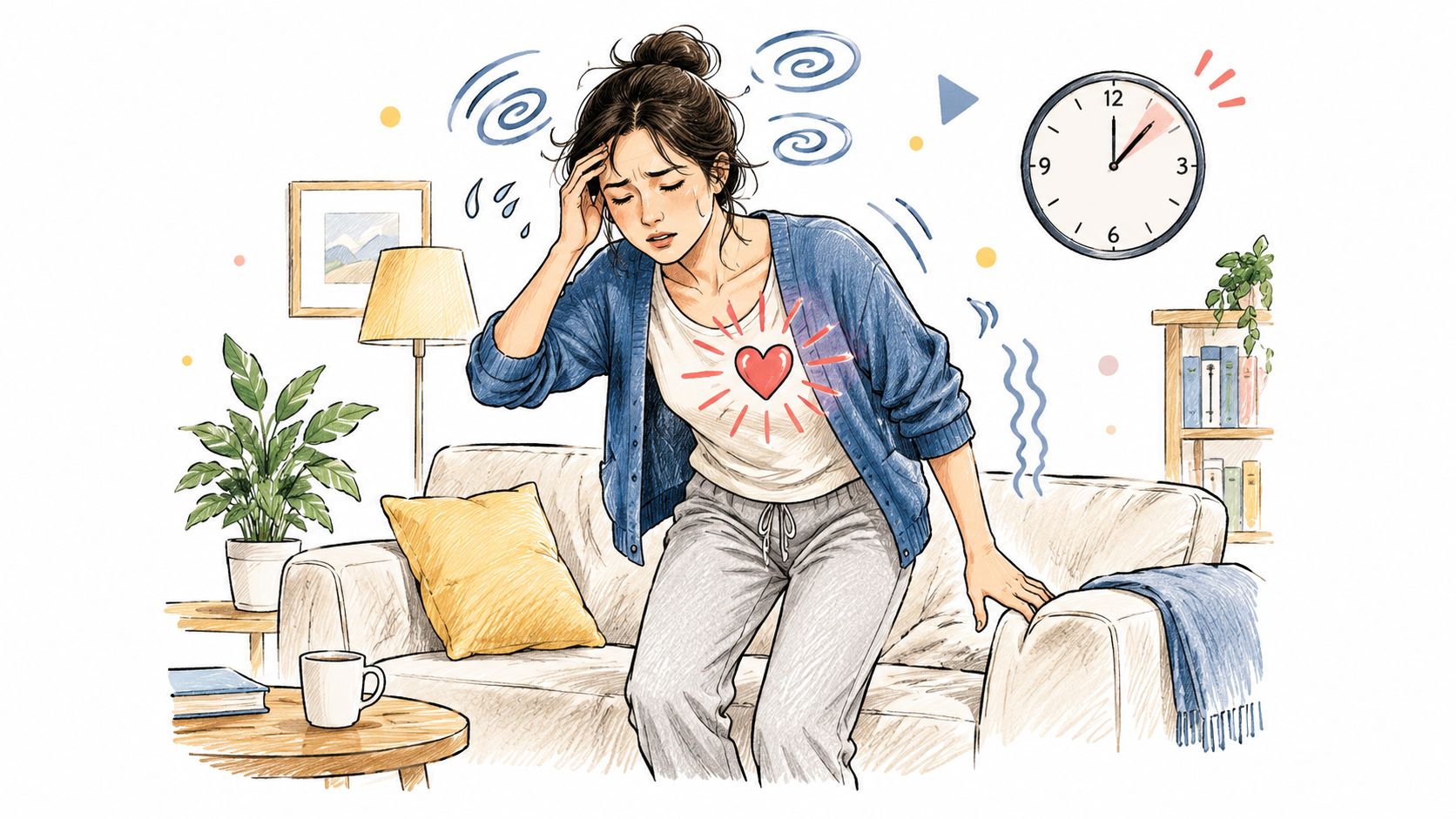
Consider a typical morning. A person wakes up feeling reasonably well, sits on the edge of the bed, and then stands. Their heart rate rises, their legs feel weak, and concentration becomes difficult. By the time they reach the kitchen, they may need to sit down, not because they've completed strenuous exercise, but because remaining upright has become physiologically demanding.
Why ordinary tasks can feel unusually hard
POTS symptoms vary considerably. Light-headedness and palpitations may dominate one person's day, while another mainly notices fatigue, brain fog, headaches, shortness of breath, or exercise intolerance. Heat, prolonged standing, illness, and other personal triggers can intensify symptoms, but the pattern isn't identical for everyone.
That variability often creates confusion. A single symptom such as a fast pulse doesn't establish POTS, and symptoms can overlap with many other conditions. The useful clue is the relationship between posture, heart-rate change, duration, and symptoms.
Practical rule: A wearable can help you describe a recurring pattern, but it can't determine the cause of that pattern by itself.
POTS also matters beyond the moment of an episode. Repeated uncertainty can affect work, school, exercise, travel, and social plans. Tracking what happens after standing gives you a clearer record to discuss with a healthcare professional, especially when symptoms are intermittent and an appointment captures only a quiet part of the day.
Diagnostic Criteria and Heart Rate Thresholds
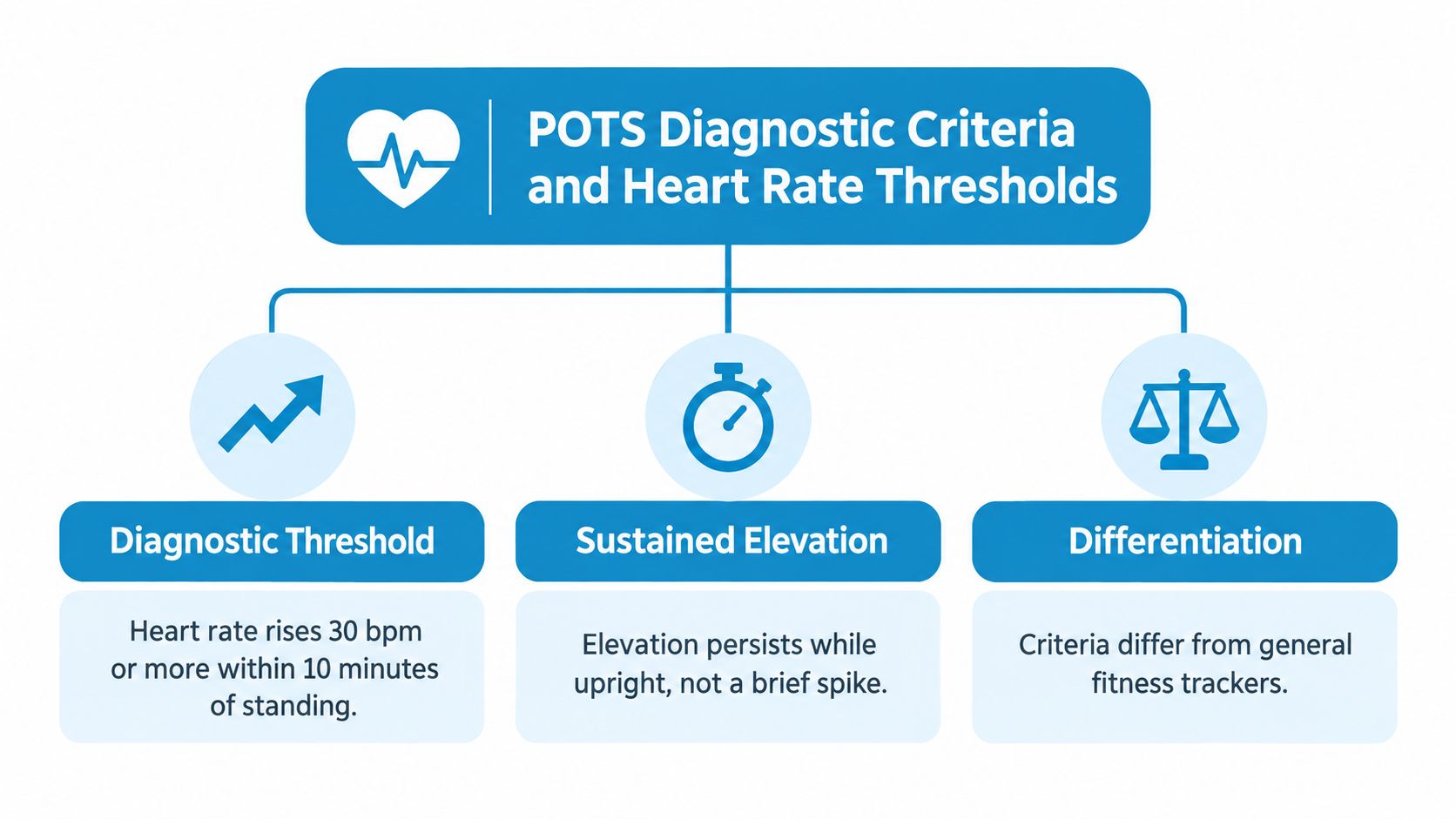
POTS diagnosis uses a structured change in heart rate, not just a high reading on a fitness tracker. In adults, the commonly used criterion is a sustained rise of at least 30 beats per minute within 10 minutes of standing or head-up tilt, without orthostatic hypotension. For adolescents aged 12 to 19, the threshold is at least 40 beats per minute. These criteria are described in the Heart Rhythm Society expert consensus statement.
Start with the baseline. A clinician may measure heart rate after a period of lying down, then compare it with readings taken after standing. The question is not, “Did the pulse ever jump?” It's, “Did the heart rate rise by the relevant amount and stay raised while upright?”
Why one spike isn't enough
Standing naturally requires the cardiovascular system to adjust. A brief jump can result from movement, anxiety, talking, inaccurate sensor contact, or an unrelated physiological response. Clinical guidance therefore emphasizes repeated observations at 1, 3, 5, 8, and 10 minutes, looking for a sustained pattern rather than a momentary peak. The structured orthostatic measurement guidance explains why timing and repeated measurements matter.
A useful clinical-style record includes:
- Starting heart rate, measured while resting.
- Posture change, with the approximate time you stood.
- Readings during upright time, especially at the scheduled intervals.
- Symptoms, such as dizziness, palpitations, weakness, or brain fog.
- Blood pressure context, because POTS criteria require assessment without the specified orthostatic blood-pressure drop.
The threshold is a reference point, not a self-diagnosis shortcut. A wearable may suggest that your heart rate repeatedly changes in a relevant way, but a healthcare professional must interpret the result alongside medical history, medications, blood pressure, other possible causes, and chronic orthostatic symptoms.
For a practical explanation of how clinicians approach this process, see this guide to orthostatic intolerance diagnosis.
The Physiology Behind Orthostatic Tachycardia
Standing changes the distribution of blood in your body. Gravity encourages blood to collect in the legs and lower trunk, while the autonomic nervous system normally tightens blood vessels and adjusts the heart to preserve circulation to the brain.
With POTS, that compensation can be less effective or unusually demanding. Venous pooling and impaired peripheral sympathetic vasoconstriction can reduce the amount of blood returning to the heart. The body responds with greater sympathetic activation, and the heart beats faster to help maintain blood flow.
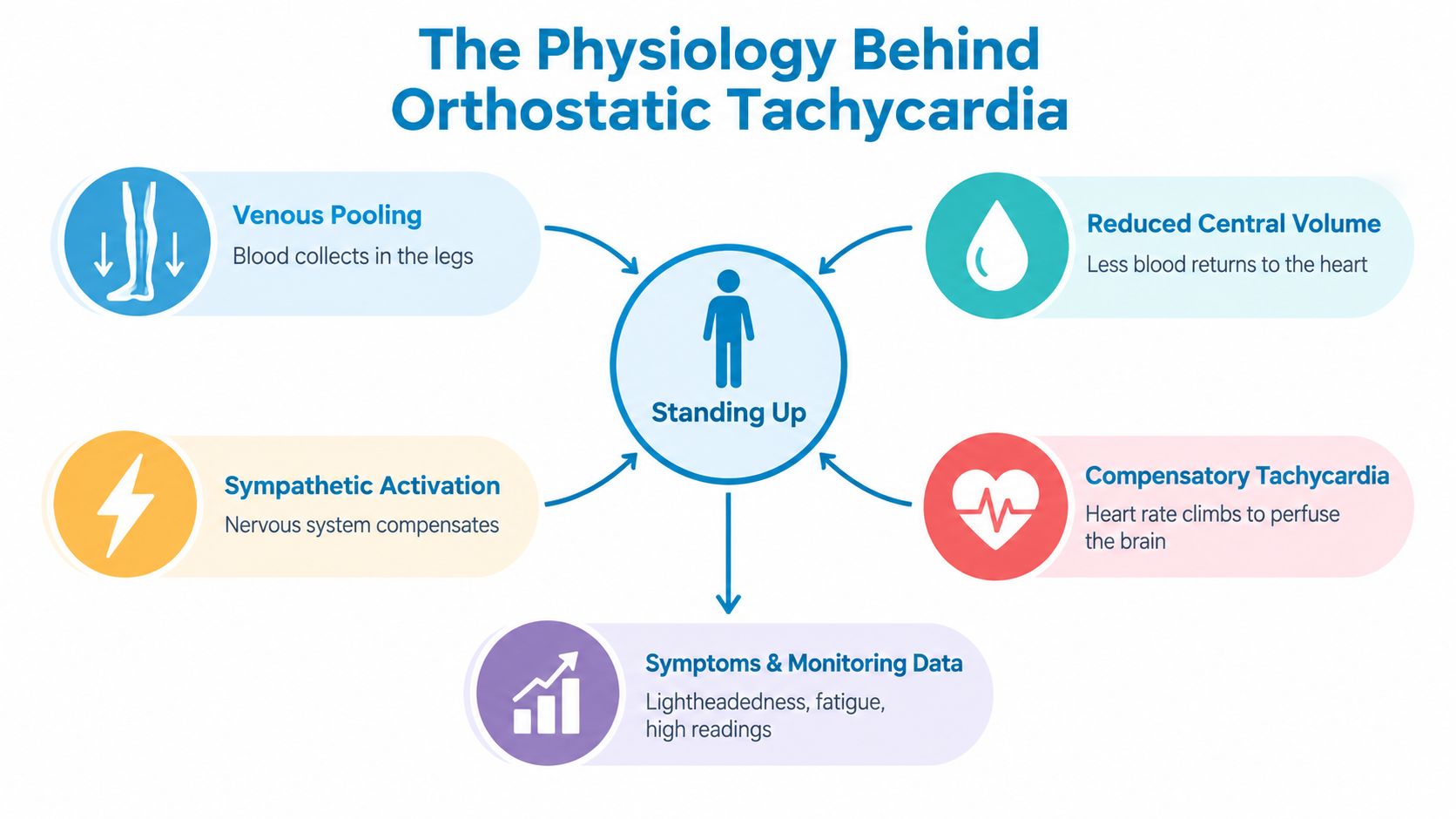
A simple analogy is a water pump receiving less fluid than expected. The pump may work faster to keep flow moving, but the faster rate doesn't necessarily solve the underlying supply problem. In POTS, the rapid pulse is often a compensation for altered circulation rather than a response to intentional exercise.
Why context changes the meaning of a high reading
The same heart rate can mean different things in different situations. During exercise, muscles demand more blood and the heart rate rises as part of an organized response. During a POTS episode, the rise may occur after standing still, with light-headedness, fatigue, or palpitations.
Clinical reviews describe standing heart rates that can be above 120 beats per minute in episodes, but the number alone doesn't diagnose POTS. The posture, baseline, duration, symptoms, and blood-pressure response all matter. Heat and prolonged standing can make the circulation challenge more pronounced, while meals may alter blood distribution during digestion.
This is why a useful wearable record should preserve the sequence of events. “My heart rate was high” is less informative than “I stood after resting, my rate rose, it stayed high while I remained upright, and dizziness began at the same time.”
For broader background on the body's automatic regulation, review the relationship between the sympathetic and parasympathetic nervous systems.
From Historical Observations to Modern Recognition
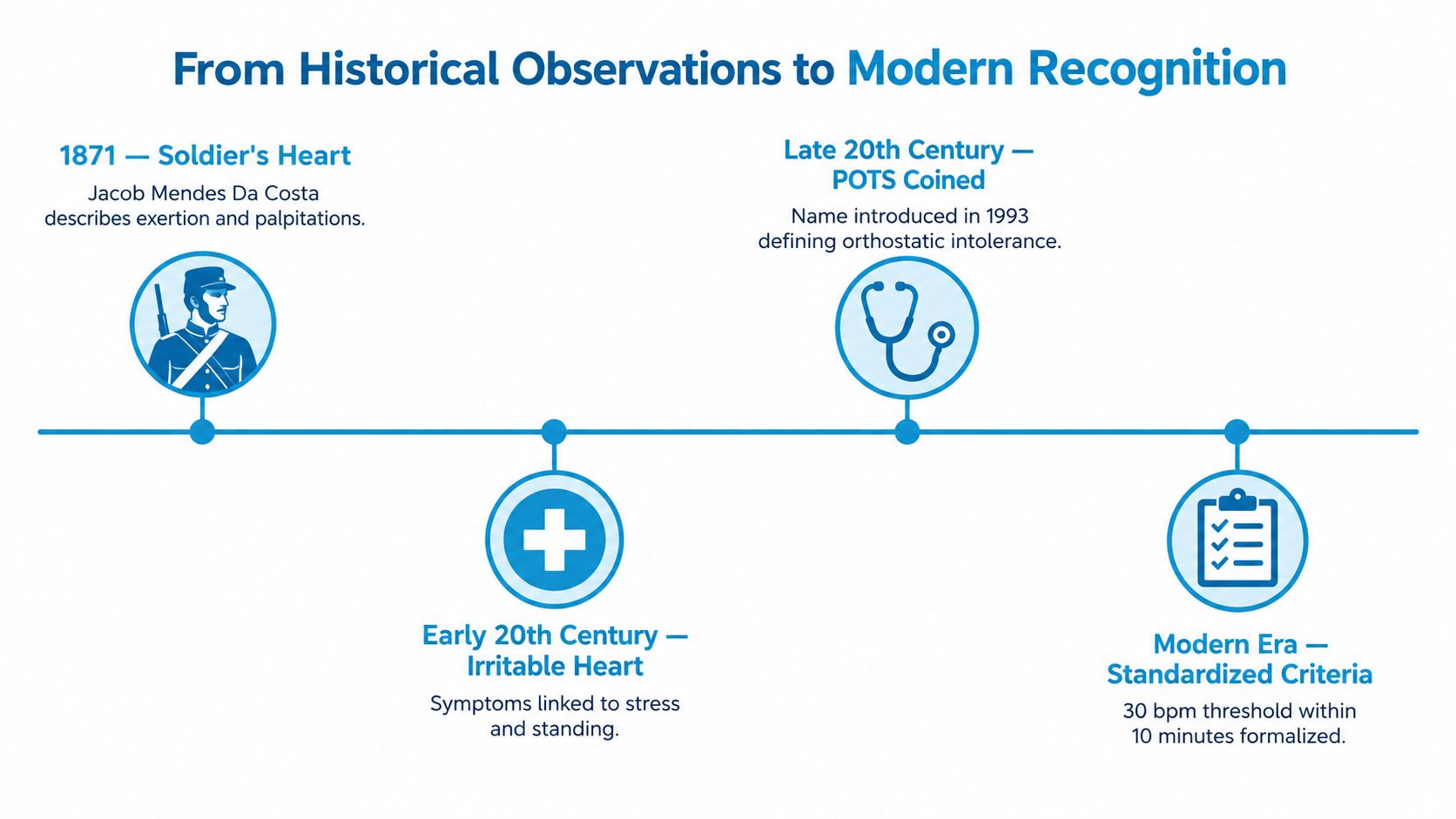
The symptoms associated with POTS-like illness aren't new. In 1871, Jacob Mendes Da Costa described “soldier's heart” or “irritable heart,” an early account of exertion-related symptoms and palpitations. The observation shows that the underlying experience has been recognized for more than 150 years, even though modern diagnostic language came much later. This historical context is summarized in a clinical review of POTS.
The challenge was not that patients lacked symptoms. It was that clinicians had limited ways to connect those symptoms to changes in posture, circulation, and autonomic function. Palpitations, fatigue, dizziness, and exercise intolerance can appear in many conditions, and a standard office visit may not reproduce the upright episode.
Why standardization changed the conversation
The 2015 Heart Rhythm Society Expert Consensus Statement helped formalize the modern clinical framework. By emphasizing a sustained heart-rate rise, age-specific thresholds, absence of orthostatic hypotension, and chronic orthostatic symptoms, it gave clinicians a shared reference point.
That standardization helps, but it doesn't eliminate diagnostic delay. A 2025 report on gender bias in POTS described women waiting about 7 years for diagnosis compared with 3.8 years for men, while 70% reported initially being told their symptoms were anxiety or psychosomatic. These figures come from the University of Adelaide report on POTS diagnosis.
The lesson is practical. Historical recognition tells us that the symptoms are real and persistent, while modern criteria tell us how to evaluate them more consistently. A clear record can help connect the two by showing what happens outside the clinic.
Traditional Monitoring Versus Wearable Technology
Clinical testing and wearable monitoring answer different questions. A tilt-table test or structured orthostatic assessment observes your response under controlled conditions. A wearable records what happens during ordinary life, when you get out of bed, stand in the kitchen, walk to work, or experience a flare after heat exposure.
Neither approach replaces the other.
| Monitoring approach | What it captures well | Where interpretation is limited |
|---|---|---|
| Structured clinical assessment | Controlled posture changes, repeated heart-rate readings, and blood-pressure context | May not reflect every daily trigger or symptom pattern |
| Tilt-table testing | A standardized response to head-up tilt with clinical supervision | Results still require interpretation within your broader history |
| Wearable tracking | Timing, frequency, peaks, duration, and real-world context | Consumer sensors and algorithms don't establish a diagnosis |
| Symptom notes | How dizziness, fatigue, palpitations, and brain fog feel during an event | Memory and inconsistent logging can introduce gaps |
A wearable is especially useful for longitudinal context. It can reveal whether episodes cluster after waking, during prolonged standing, or at particular times of day. It can also show whether a dramatic reading occurred during exercise, recovery, sleep, or a quiet upright period.
The metrics that carry the most meaning
Focus on the relationship between measurements rather than collecting every available graph:
- Baseline heart rate: What was your rate during a genuine resting period?
- Rise from baseline: How large was the change after becoming upright?
- Peak rate: How high did the episode reach?
- Sustained duration: Did the elevation persist or disappear quickly?
- Posture and activity: Were you standing still, walking, exercising, or recovering?
- Symptoms and triggers: What did you feel, and what was happening beforehand?
A practical interpretation: Wearable data is strongest when it helps a clinician ask a better question, not when it tries to provide the final answer.
Consumer devices can also miss beats, smooth readings, or misclassify movement. Treat the output as a structured observation. Clinical assessment remains necessary, especially because POTS criteria include blood-pressure considerations and chronic symptoms that a heart-rate graph cannot measure completely.
Practical Wearable Monitoring with Apple Health
Raw heart-rate data becomes more useful when you add a timeline. If you use an Apple Watch, begin by recording the circumstances around an episode instead of relying on a single high reading in Apple Health.
Build an episode record
When you notice symptoms, capture the approximate time and what you were doing. Note whether you had been lying down, sitting, standing still, walking, exercising, showering, eating, or recovering from activity.
Then record the information that makes the event interpretable:
- Starting point: The most recent resting or seated heart rate before standing.
- Posture change: When you became upright.
- Response: The highest observed rate and whether the increase continued.
- Symptoms: Dizziness, palpitations, fatigue, weakness, breathlessness, or brain fog.
- Context: Sleep quality, hydration, salt intake, medication timing, heat, illness, or meals.
Don't try to log every sensation with perfect precision. Consistent, brief notes are more useful than occasional elaborate entries. A simple entry such as “stood after breakfast, dizziness began, remained upright for several minutes” gives a clinician context that a graph alone can't provide.
Review patterns over time
Look across weeks rather than judging yourself from one day. Compare episode timing, resting trends, symptom intensity, and activity context. Exclude obvious exercise responses from your interpretation, and mark recovery periods separately because heart rate can remain high after exertion.
If you want a more structured workflow, Apple Health integration for heart-rate monitoring can help organize existing watch data without requiring additional sensors. Cardiogram analyzes Apple Health heart-rate data to identify tachycardic episodes, record baseline, peak, duration, and timing, and connect episodes with logged symptoms and triggers. It can also generate a clinician-oriented PDF summary, while its analysis is designed to run on the device with read-only HealthKit access.
Your watch isn't a diagnostic instrument, and an app cannot confirm POTS. Its value is organizational: it can reduce the burden of reconstructing months of events from memory and make the posture-related pattern easier to discuss.
Integrating Monitoring Data Into Ongoing Care
A clinician usually needs a concise story, not an overwhelming archive of every heart-rate sample. Before an appointment, select representative episodes and summarize what tends to happen before, during, and after them.
Bring a short written overview that answers four questions:
- What starts the episode? Standing after rest, prolonged upright time, heat, meals, illness, or another context.
- What does the heart rate do? Describe the baseline, rise, peak, and whether the increase persists.
- What symptoms occur? Link dizziness, palpitations, fatigue, or cognitive difficulty to the timing.
- What changes the pattern? Sitting or lying down, rest, hydration, prescribed treatment, or avoiding a trigger.
A weekly trend can be more persuasive than a dramatic isolated event. If your episodes happen only occasionally, say so. If your data is incomplete because the watch wasn't worn, include that limitation rather than implying continuous coverage.
Communicating with a nonspecialist
Primary care clinicians, cardiologists, and autonomic specialists may each approach the information differently. Use plain language and invite clinical interpretation: “I've noticed repeated heart-rate rises after standing, often with dizziness. Could we review whether structured orthostatic measurements or other evaluation would be appropriate?”
Keep the original data private and share only what you intend to share. An exportable report can make that easier, but you should review dates, notes, and identifying information before sending it. The record supports care. It doesn't replace examination, blood-pressure measurements, or evaluation for other explanations.
Moving Forward With Informed Self-Management
A POTS journey often becomes more manageable when you stop treating every episode as an isolated mystery. A person may begin with scattered notes, then gradually identify that symptoms are more likely after standing quickly, during heat, or following disrupted sleep. That knowledge doesn't eliminate the condition, but it can make daily decisions more deliberate.
Treatment is individualized. Clinical management may combine fluids, salt, physical therapy, compression, medication, and adjustments to daily routines, depending on the person's symptoms, health history, and possible subtype. A 2025 review found that therapeutic exercise has a role in POTS, but also described limited evidence and a high risk of bias, so exercise should be introduced carefully and adapted for people with exercise intolerance. The review of therapeutic exercise in POTS supports a personalized rather than one-size-fits-all approach.
A realistic next step
Choose one monitoring goal. You might track the transition from lying down to standing in the morning, document symptoms during a typical shower, or record episodes for an upcoming appointment. Pair the heart-rate pattern with what you felt and what you were doing.
Then bring that organized record to a healthcare professional. Seek urgent medical attention for severe or new chest pain, serious breathing difficulty, fainting with injury, or other symptoms that concern you. Wearables can increase awareness, but they work best as part of professional evaluation and a broader self-management plan.
Progress may come from small adjustments, clearer communication, and finding which strategies fit your body. The purpose of monitoring isn't to chase a number. It's to turn confusing episodes into usable information.
Cardiogram helps Apple Watch users organize heart-rate episodes into timelines with baseline, peak, duration, symptoms, and trigger context, then export a clinician-ready summary for appointments. If you're trying to understand recurring upright tachycardia, visit Cardiogram to explore structured monitoring with your existing Apple Health data.