Extra plain water doesn't reliably lower salt intake or blood pressure: in a six-month trial, adding 1,500 mL daily produced almost no change in blood sodium. Your kidneys handle sodium over hours rather than instantly flushing it away, so hydration supports fluid balance while reducing salt intake requires eating less dietary sodium.
That makes the familiar advice to drink extra water after salty food less useful than it sounds. A glass of water may make you feel more comfortable, but comfort isn't evidence that you've undone the meal.
There's also an important exception for people with POTS or hypovolemic dysautonomia. A clinician may deliberately pair water with salt to support blood volume, a very different goal from trying to cancel sodium.
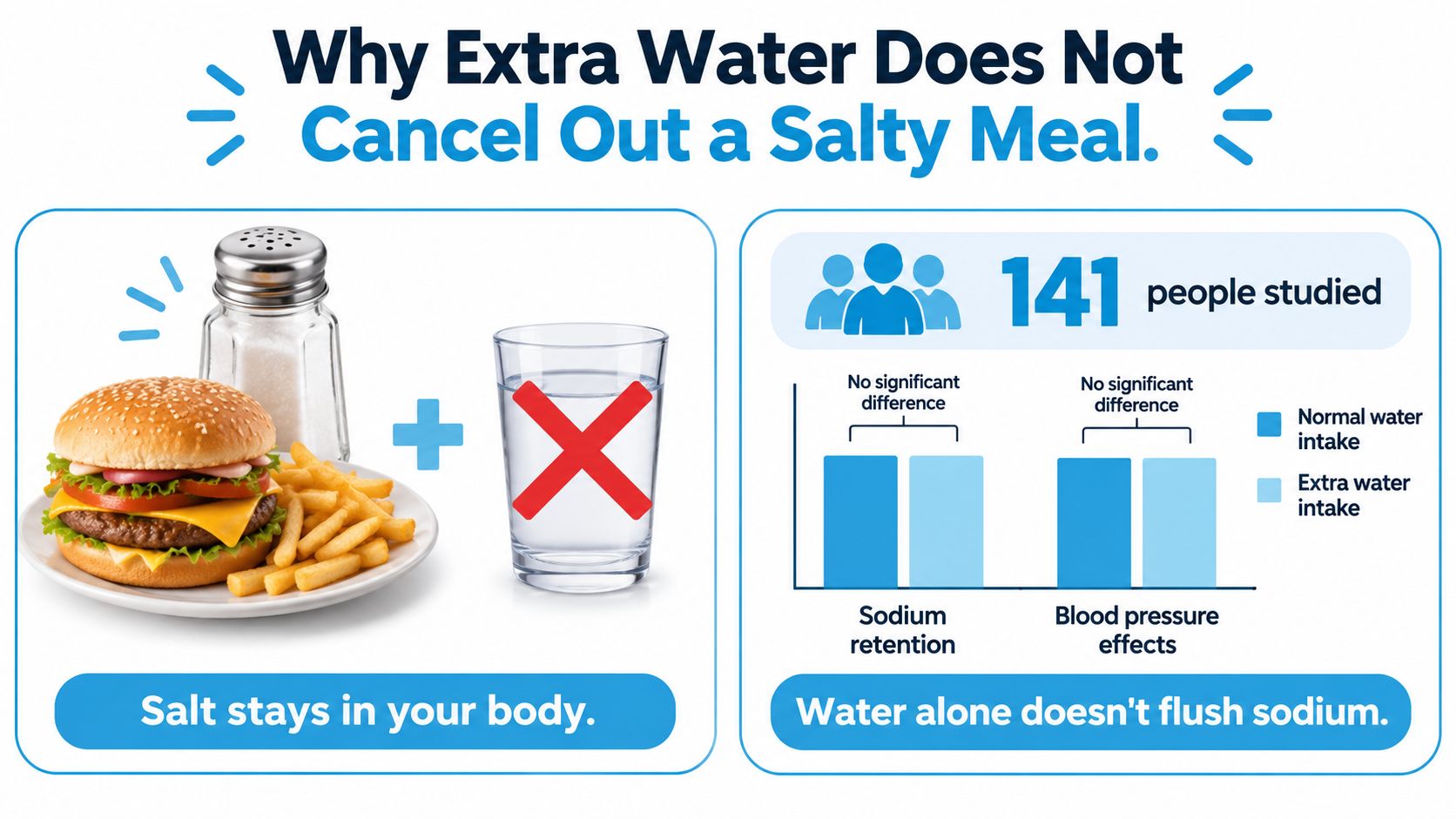
Why Extra Water Does Not Cancel Out a Salty Meal
The most useful evidence challenges the idea that more water automatically means less sodium-related harm. In 141 men aged 55–75, additional water produced a blood-sodium change of −0.2 mmol/L with a 95% confidence interval of −1.1 to 0.6, while systolic pressure fell 2.4 mmHg with a confidence interval of −8.0 to 3.2, findings summarized in a systematic review of water-intake trials.
Those uncertainty ranges matter. The results don't establish a dependable blood-pressure benefit from adding plain water, and they shouldn't be turned into a promise that hydration offsets salty eating.
Intake isn't the same as concentration
Salt intake describes what you consume. Blood sodium describes sodium's concentration in your blood, which reflects the relationship between sodium and water rather than the salt content of your last meal.
Adding water doesn't subtract sodium from the food you've already eaten. Nor does a small change in blood concentration tell you that your overall sodium exposure has meaningfully improved.
Consider a restaurant meal with salty sauce. Drinking water afterward changes your fluid intake; choosing less sauce changes your sodium intake. These actions address different things, even though both involve fluid balance.
Practical rule: Treat water as hydration, not as a credit you can spend against salty food.
Change the source, not the compensation
If your clinician has recommended sodium reduction, focus on the foods contributing it. Processed meals, restaurant dishes, sauces, and salty snacks deserve attention, rather than the size of the glass beside them.
- Compare similar foods. Choose the option with less sodium when that fits your prescribed eating plan.
- Notice sauces and extras. Record them instead of estimating sodium from the main dish alone.
- Keep water separate. Don't mark a high-sodium meal as balanced out because you drank afterward.
The question “Does drinking water help with salt intake?” therefore needs a distinction: water can help meet fluid needs, but it doesn't reduce the amount of salt consumed. That's why a hydration log and a sodium log shouldn't be opposite ends of a single scale.
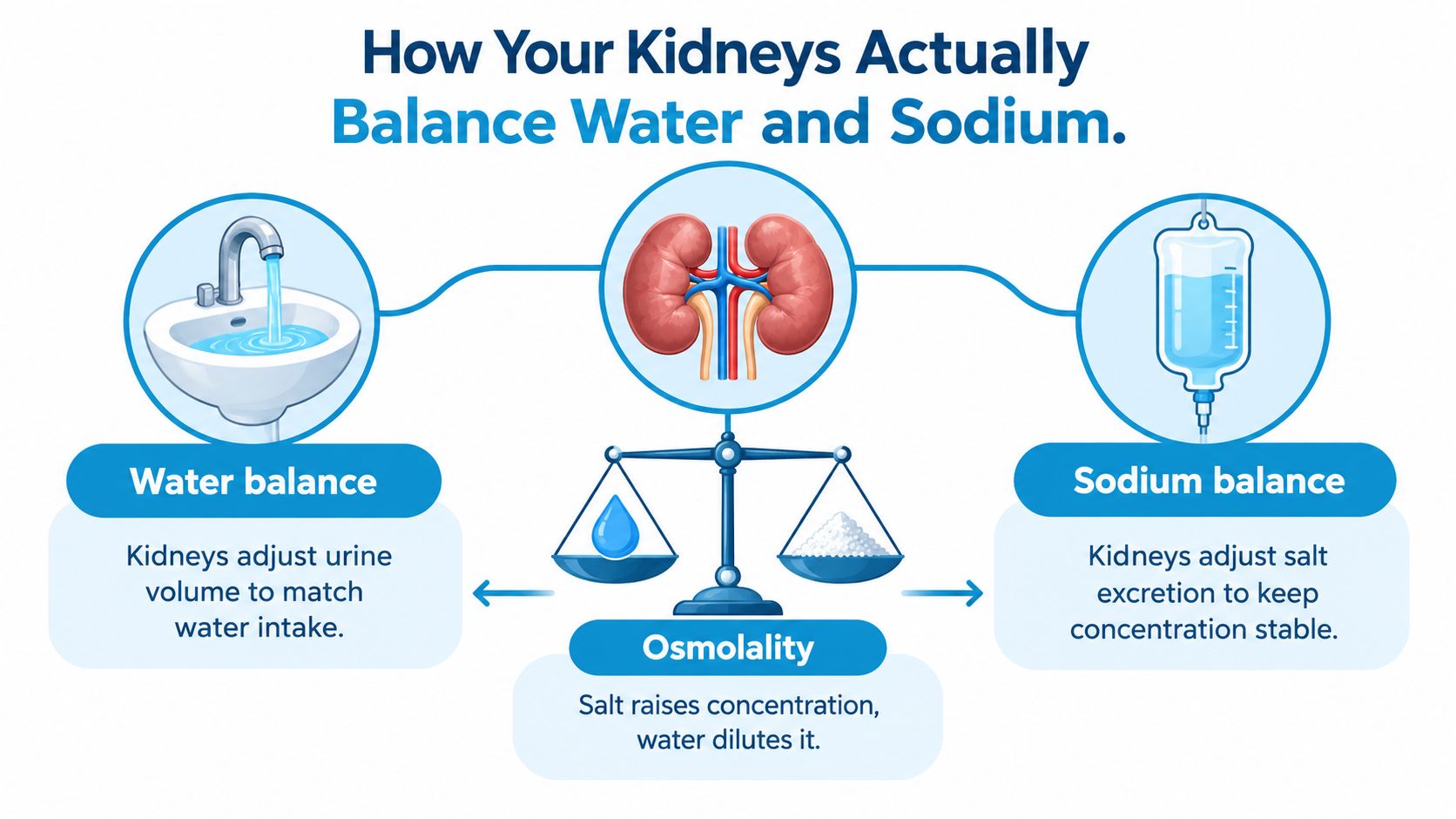
How Your Kidneys Actually Balance Water and Sodium
Think of a sink containing salty water. Adding fresh water makes the mixture less concentrated, but the salt remains until some of the mixture drains away. Dilution and removal aren't the same process.
Your body is more complicated than a sink because your kidneys adjust what leaves and what stays. Still, the analogy helps explain osmolality, a measure of how concentrated fluid is with dissolved particles.
Concentration triggers a coordinated response
Excess sodium can increase the concentration of fluid outside your cells, stimulating thirst and signals that conserve water. The kidneys regulate sodium and water together, and sodium excretion generally carries water with it through osmotic diuresis; in a clinical cohort of 295 people, 24-hour urinary sodium correlated with blood pressure in adults and children, whereas reported dietary sodium and sodium consumed in water didn't show a significant relationship with mean pressure, as described in this clinical investigation of sodium intake, excretion, and blood pressure.
That result isn't proof that dietary sodium is harmless. It illustrates why the amount someone drinks or reports eating may not neatly represent what their kidneys handle.
Different measurements answer different questions
A bathroom trip can feel like visible confirmation that you've removed the salt. But urine volume alone doesn't reveal how much sodium left with it.
| Observation | What it can tell you | What it can't establish alone |
|---|---|---|
| Water consumed | How much fluid you drank | Your sodium exposure |
| Thirst easing | A change in how you feel | How much sodium you excreted |
| Urine volume changing | A change in fluid output | The sodium content of that urine |
| Clinically ordered urine sodium | Information about sodium excretion | A complete explanation of symptoms |
Extra plain water may temporarily dilute plasma sodium and support normal renal handling. It doesn't chemically neutralize sodium or reliably prevent its blood-pressure effects.
For everyday decisions, follow thirst and any clinician-prescribed fluid target, rather than forcing water to provoke more urination. If your clinician needs a clearer picture of sodium balance, diet history and appropriate testing are more informative than counting glasses alone.
Salt and Water Pairing for POTS and Dysautonomia
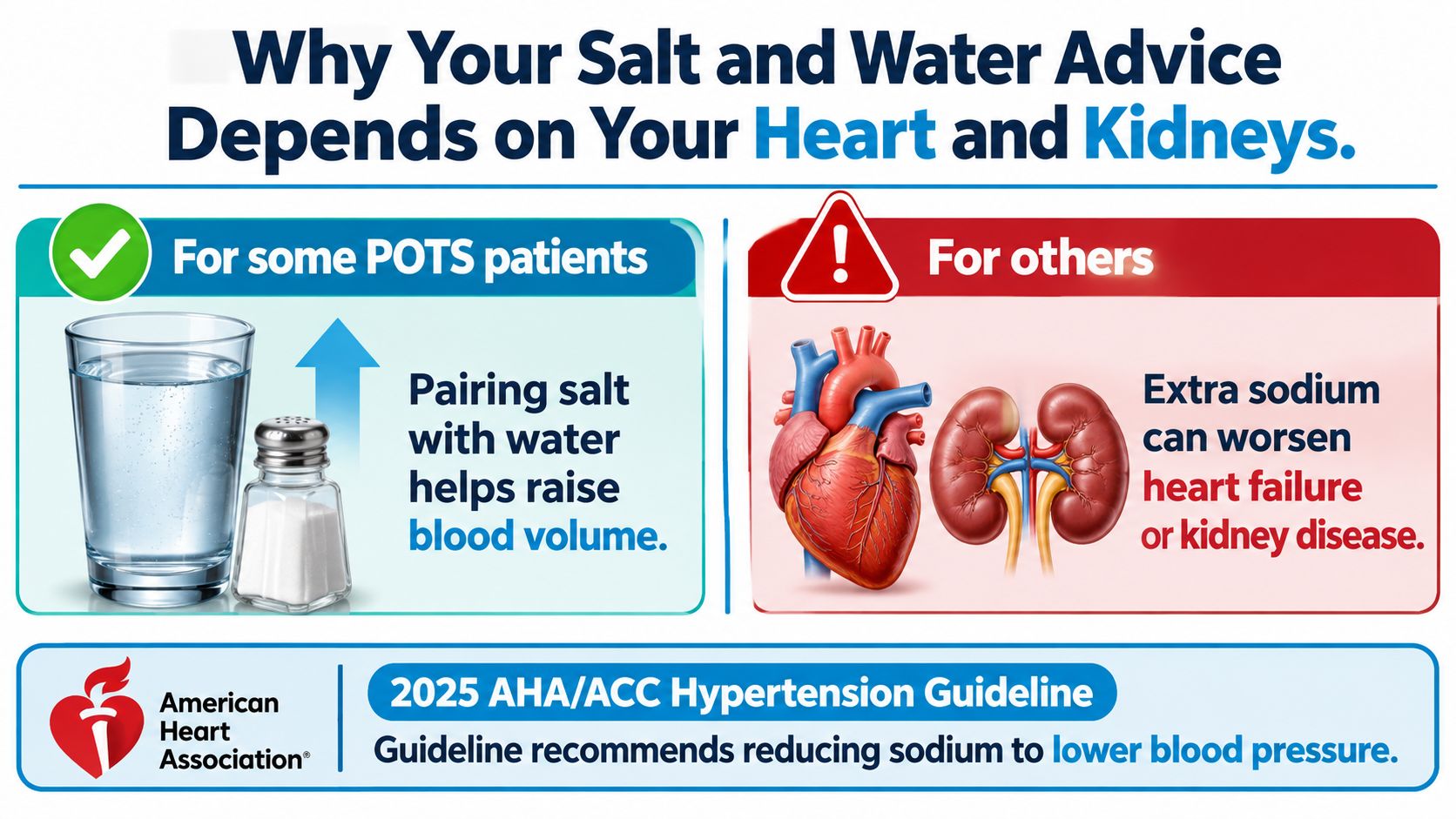
For some people with POTS or hypovolemic dysautonomia, drinking water is not a way to undo salt. A clinician may instead recommend sodium and water together to retain fluid and expand blood volume. The goal is different from a sodium-reduction plan, which aims to lower sodium exposure.

The pairing matters. Water alone may not produce the same volume-expansion effect as a plan that deliberately combines fluid with sodium. It is a bit like filling a reservoir: the treatment aims to support the amount of fluid circulating in the body, not to increase bathroom trips.
What the reference ranges mean
For selected patients with suspected hypovolemia, Heart Rhythm Society consensus guidance allows consideration of approximately 2–3 L of water with 10–12 g of sodium chloride daily. A small crossover study compared approximately 300 mEq/day with 10 mEq/day of sodium and found increased plasma volume, along with reduced upright heart-rate and norepinephrine responses. The findings are discussed in this review of dietary sodium in orthostatic disorders.
These are medical reference ranges, not a self-treatment prescription. The review also notes that long-term evidence is limited. A short-term change in body physiology does not guarantee lasting symptom improvement.
Units can cause confusion, too. The consensus amount is sodium chloride, or salt; food labels commonly list sodium. They are related, but they are not interchangeable quantities. Check which one a clinician's target refers to before comparing it with a label.
A paired treatment needs a paired plan. Increasing only water or only salt may not match the approach your clinician intended.
Before changing intake, ask what the plan is meant to improve, such as standing tolerance or upright heart-rate responses. Agree on what to track and when the plan should be reviewed.
Clarify the fluid target, including how it applies to your usual drinks and any restrictions. Confirm the sodium target, its units, and whether food and supplements count together. Then agree on what symptoms or measurements to report.
High salt needs particular caution with hypertension, kidney disease, or heart failure. To organize observations, record posture changes, symptoms, and medication timing alongside intake, and use guidance on hydration and heart-rate patterns.
What Really Happens After a Salty Meal
Water can ease thirst after a salty meal without removing the sodium. That distinction matters: thirst is a sensation, while sodium balance depends on how the body handles both sodium and water over time.
After a salty restaurant dinner, you might reach for water before bed. A drink may make your mouth feel more comfortable, but that relief alone cannot tell you whether your body has excreted extra sodium or retained fluid.
Human metabolic-balance research found that a 6 g/day salt increase reduced free-water clearance and lowered measured fluid intake by about 293 mL/day, as described in this discussion of salt intake and human water balance. The result illustrates a counterintuitive response: after sodium intake rises, the body may conserve water rather than simply prompt more drinking and immediate removal.
That finding does not predict what one restaurant meal will do. People can respond differently, and a single evening does not provide enough information to judge fluid balance.
Less thirst means thirst has eased. It does not measure how much sodium the body has removed.
By morning, your weight or bathroom pattern may differ, or you may notice no obvious change. None of those observations, by itself, gives a complete verdict on hydration or sodium balance.
If you already track orthostatic symptoms, record the meal and your usual response instead of deliberately drinking a large amount to test whether you will urinate more. A sudden increase in water can change how you feel without showing that sodium's effects have been erased.
Note what happened that evening: the meal, sauces, fluid amount, and approximate timing. The next morning, keep thirst separate from dizziness, fatigue, or palpitations. During ordinary activity, notice whether symptoms occur lying down, sitting, or standing. Across comparable days, recurring patterns are more informative than one isolated meal.
A calmer morning after extra water is an association, not proof that the water canceled out the meal. Posture and medication timing may differ between days, too. For people with POTS or dysautonomia, water can be useful when paired deliberately with sodium as part of a clinician-guided plan. That is different from treating water as a general-purpose antidote to salt.
There is no need to punish yourself for a salty meal or compensate aggressively. Return to your prescribed eating and fluid plan, and bring any useful observations to your clinician.
When the Water Itself Adds to Sodium Load
Not all drinking water has the same sodium content. In coastal regions or areas with saline groundwater, the water supply can contribute meaningfully to sodium exposure.
This is a different question from how much water to drink. It concerns what's dissolved in the water, which means the glass itself may belong in a sodium assessment.
What salinity research found
Each 100 mg/L reduction in drinking-water sodium was associated with average blood-pressure reductions of 0.95 mmHg systolic and 0.57 mmHg diastolic, and approximately 14% lower odds of hypertension; the estimated effect of a 200 mg/L reduction at roughly 2.5 L daily was about 500 mg less sodium per day, as reported in research on drinking-water salinity and blood pressure.
These are associations and estimates from a particular setting, not a promise about your household supply. The relevant starting point is whether your water contains appreciable sodium.
Water-source changes also need careful interpretation. A supply described as improved or managed isn't automatically the lowest-sodium choice available, so the actual mineral information matters more than a reassuring description.
Decide whether checking water is worthwhile
For most individuals in markets with ordinary low-sodium tap or bottled water, food remains the main sodium burden. Don't assume water is your largest source before reviewing meals, sauces, and snacks.
| Your situation | A useful next step |
|---|---|
| Ordinary low-sodium supply | Prioritize dietary sources |
| Known saline groundwater or coastal supply | Request local sodium information |
| Uncertain mineral content | Check available water-quality details |
| Clinician-directed sodium restriction | Ask whether water sodium should be included |
If salinity is relevant, ask your local supplier or health authority about sodium content. For packaged water, review mineral information when available rather than assuming every bottle is sodium-free.
If you use treated water, ask whether that treatment addresses sodium. Don't treat the word filtered as proof that the resulting water meets your medical needs.
A lower-sodium drinking-water option can make sense where the supply contributes substantial sodium. The principle is straightforward: reduce an actual sodium source when needed, rather than increasing its volume and hoping for compensation.
Why Your Salt and Water Advice Depends on Your Heart and Kidneys
Drinking more water is not a general antidote to salt. The right advice depends on how your heart and kidneys handle changes in fluid and sodium, so the same symptom can call for different responses.
Dizziness when standing, for example, can occur in people with different conditions. It does not by itself mean that increasing salt and fluid is safe. Before recommending volume expansion, a clinician considers diagnosis, blood pressure, medications, kidney function, and any fluid restrictions.
Blood pressure may call for less sodium
The 2025 AHA/ACC hypertension guideline reports that reducing sodium to 1,500–2,300 mg/day lowers blood pressure by approximately 3/2 mmHg in normotensive adults and 7/3 mmHg in adults with hypertension, as described in the guideline for preventing and managing high blood pressure. The paired figures refer to systolic and diastolic blood pressure. They support sodium reduction as one approach to blood-pressure management; drinking more water does not make a higher sodium intake harmless.
Extra fluid can create a different problem
With chronic kidney disease or dialysis-related restrictions, the body may not remove sodium normally. Sodium can contribute to fluid retention and higher blood pressure, so general advice to increase salt and water may not fit.
On the other hand, drinking excessive plain water while restricting sodium can contribute to hyponatremia, meaning low blood sodium. Replacing one imbalance with another is not a safe hydration strategy.
Your condition changes the questions to ask:
- Hypertension: Ask whether reducing sodium is part of your treatment.
- Kidney disease or dialysis restrictions: Follow your prescribed fluid and sodium limits, rather than relying on thirst alone.
- Heart failure: Get your treating clinician's approval before trying to expand fluid volume.
- POTS or dysautonomia: Review any overlapping conditions before changing an established plan.
An overview of postural orthostatic tachycardia treatment can help you prepare for that discussion, but it cannot set your personal intake targets.
Personalized guidance should include a clear goal and a safety plan. Ask which lying and standing measurements to track, whether weight or swelling should be monitored, and how to report changes. That gives your clinician context to weigh symptom relief against possible heart or kidney concerns.
A Practical Logging Framework for Hydration and Salt
A useful log keeps intake, symptoms, and heart-rate episodes separate but connected in time. You're documenting what happened, not calculating whether enough water canceled enough salt.
Use whatever you can maintain consistently, whether that's a notebook, a simple table, or an episode-linked symptom tracker. A manageable record is more useful than a detailed system you abandon.
Record the context around an episode
- Fluid amount and timing. Note what you drank and when, distinguishing plain water from drinks containing sodium.
- Sodium exposure. Use available food-label information and include sauces or supplements; mark restaurant estimates as uncertain.
- Posture. Record whether symptoms began while lying down, sitting, standing, or changing position.
- Symptoms and medication timing. Describe dizziness, palpitations, fatigue, or brain fog alongside your usual medication schedule.
- Other observations. Include urine changes, weight, swelling, and clinician-requested blood-pressure measurements when relevant.
Guidance on chronic illness symptom tracking can help you keep entries focused. You don't need to record every sensation, only enough context to make recurring episodes understandable.
Review patterns without prescribing from them
Compare similar situations over time. If standing episodes seem different after a clinician-approved intake change, bring that pattern to your appointment rather than assuming you've identified the cause.
For your appointment: Bring the intake change, its timing, the symptom pattern, and any safety concerns together.
Never self-prescribe salt loading if you have hypertension, kidney disease, or heart failure. Confirm both sodium and fluid targets before starting a paired high-salt plan.
New swelling, blood pressure above your usual range, shortness of breath, or new palpitations warrant prompt clinical advice and reassessment of the new plan. Don't respond by adding still more water or salt; severe or sudden symptoms require urgent evaluation.
If your tracking method supports an exportable PDF report, bring it to your cardiology or electrophysiology appointment with the relevant intake notes. The report should support clinical review, not serve as a diagnosis or proof that a particular drink caused or prevented an episode.
Cardiogram analyzes Apple Health heart-rate data into structured episodes and trends, with symptom and trigger logging that can connect hydration and salt entries to those events. Visit Cardiogram to explore episode-linked tracking and exportable PDF summaries, then bring that context to your clinician before changing your salt-and-water plan.