
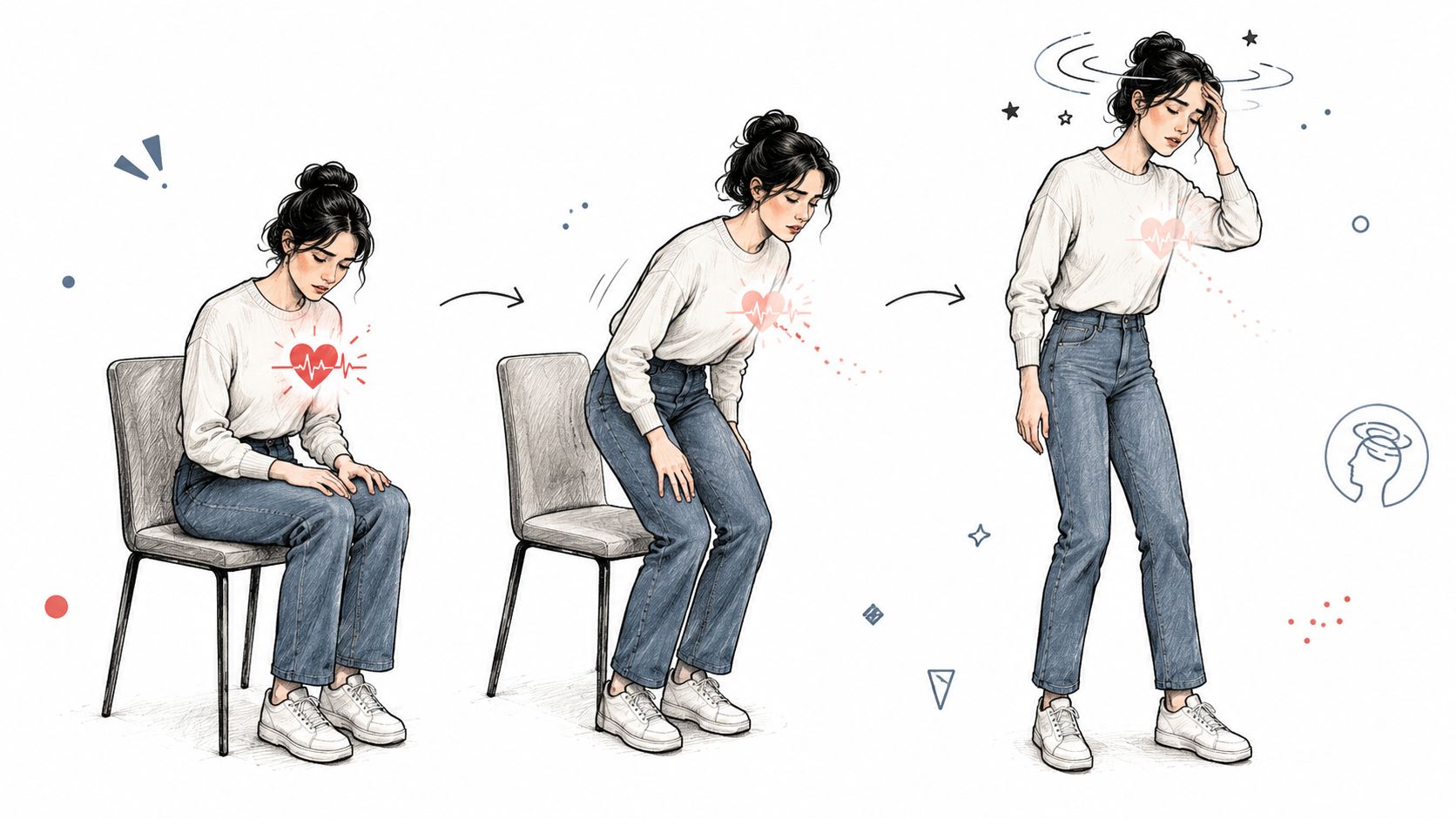
You stand up from your desk and your heart suddenly feels too fast. Your vision may blur, your head may feel light, and a wave of fatigue or brain fog can make you sit down again. When this keeps happening, a clinician may suggest a standing heart rate test to investigate postural orthostatic tachycardia syndrome, commonly called POTS.
The test sounds simple, but the details matter. A reliable result depends on resting long enough, measuring at the right intervals, staying still, and interpreting heart rate alongside blood pressure and symptoms. At-home monitoring can add useful context, especially when an Apple Watch records patterns that a single appointment may miss, but it doesn't replace a clinical assessment.
What Is the Standing Heart Rate Test and Why It Matters
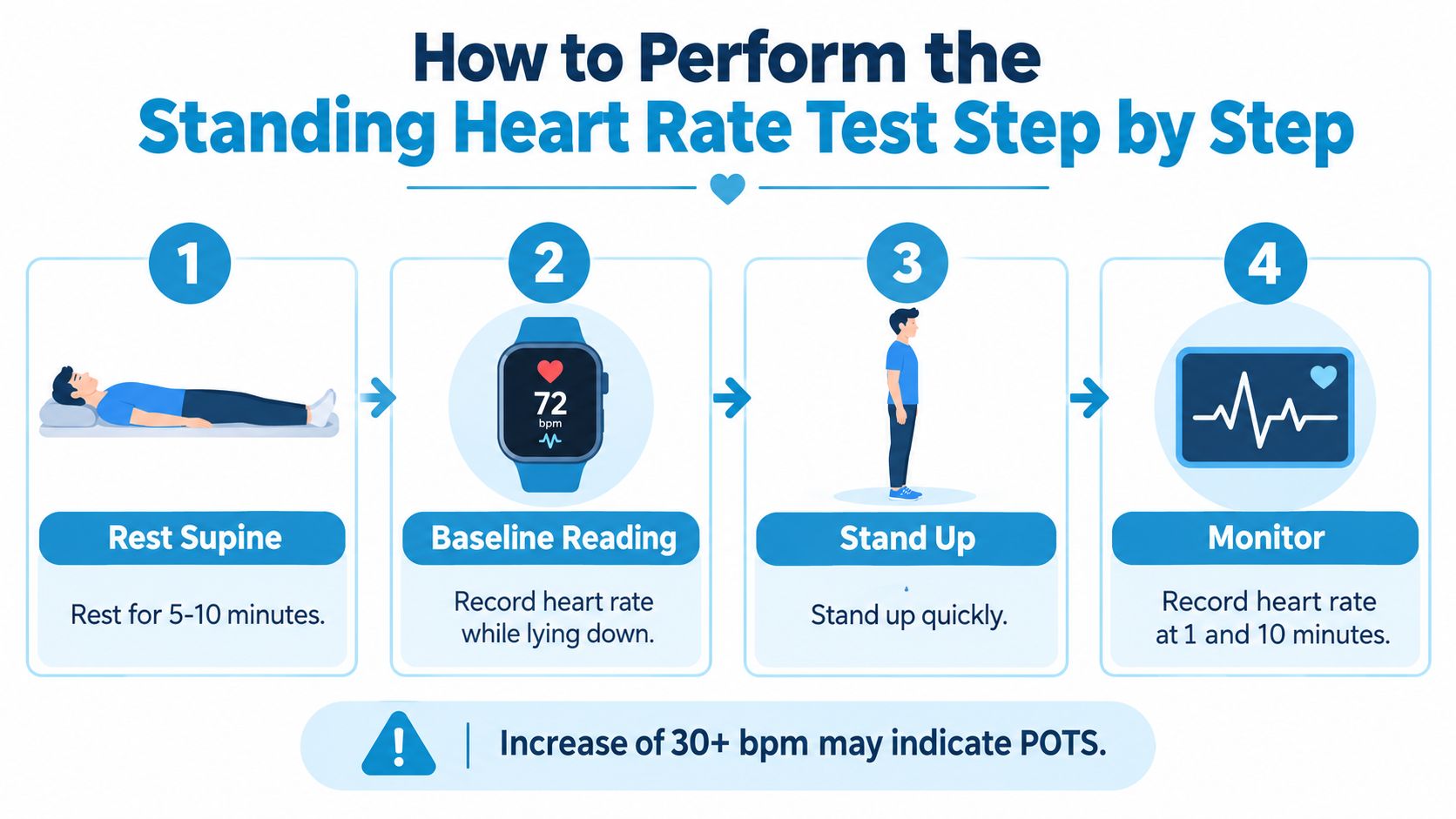
A standing heart rate test measures how your cardiovascular system responds when you move from lying down to standing. You rest supine, meaning flat on your back, and then stand while heart rate and blood pressure are checked repeatedly. The modern approach observes the response over a 10-minute upright window, rather than relying on one reading taken immediately after you stand. Clinical guidance on POTS testing describes repeated measurements after resting supine for 5–10 minutes, with checks after standing at 1, 3, 5, 8, and 10 minutes.
That timing helps clinicians see whether your heart rate rise is sustained. A brief spike can happen for many reasons, including movement or nervousness. A repeated pattern that appears during upright posture, especially when it occurs with dizziness, palpitations, fatigue, or brain fog, gives your clinician more useful information about orthostatic intolerance.
Why a single spot check isn't enough
A resting pulse tells you what your heart is doing in one position. It doesn't show how your body manages the shift against gravity. Standing changes blood distribution, and the autonomic nervous system must respond by adjusting circulation and heart rate.
The test also measures more than a pulse number. Your clinician may want to know when symptoms begin, whether they worsen as you remain upright, and whether your blood pressure falls. The absence of orthostatic hypotension is part of the POTS assessment, so heart rate shouldn't be interpreted in isolation.
Practical rule: Record the position, timing, heart rate, blood pressure, and symptoms together. The pattern is more informative than a single high reading.
The process became more standardized as POTS research and expert criteria converged on a 10-minute upright observation period and an adult heart rate increase threshold of at least 30 beats per minute. That consistency gives clinicians a shared framework, but the test still needs professional interpretation. Other causes of tachycardia and other orthostatic disorders must be considered before a diagnosis is made.
How to Perform the Standing Heart Rate Test Step by Step
Whether the test takes place in a clinic or at home, consistency is the foundation. Use a quiet space where you can stand safely beside a chair or bed. If you become severely unwell, feel close to fainting, develop chest pain, or can't remain upright, stop and seek appropriate medical help.
Prepare the measurement
Rest flat. Lie down for 5–10 minutes before taking the baseline reading. Don't use a short rest merely because you feel impatient. Your clinician needs a meaningful comparison between your resting and standing state.
Record the baseline. Write down your heart rate and, if available, your blood pressure while you're still lying down. Note the time and any symptoms already present.
Set up the watch. Wear the Apple Watch snugly, with the sensor in consistent contact with your skin. Confirm that heart rate data can be read from Apple Health, and keep your recording method ready before you stand.
Stand smoothly and stay still. Move to an upright position, plant both feet, and avoid leaning, pacing, fidgeting, or talking. The goal isn't to make the heart rate rise. It's to observe what happens during ordinary standing without adding muscle activity or conversation.
Capture the full response
Take readings at regular intervals through the standing period. A practical schedule includes 1, 3, 5, 8, and 10 minutes, while some protocols record at one-minute intervals. Record blood pressure at the same points whenever you have a suitable monitor, because a heart rate rise and a blood pressure drop represent different patterns.
Use a timer instead of estimating elapsed time. If you're checking your pulse manually, learn the technique before testing by following this guide to taking a radial pulse. An Apple Watch can reduce the burden of repeated manual checks, but it still won't provide blood pressure, and wrist-based readings can be affected by fit and movement.
Keep a simple record with columns for time, position, heart rate, blood pressure, and symptoms. Note whether dizziness, palpitations, weakness, visual changes, fatigue, or brain fog appeared at a particular point. Bring the complete record to a clinician rather than presenting only the highest number.
Interpreting Your Results Against POTS Criteria
A heart rate that rises during standing is a finding to interpret, not a diagnosis by itself. Compare your resting heart rate with readings collected after you stand. For adults, commonly used POTS criteria include a sustained increase of at least 30 beats per minute within 10 minutes of standing. For adolescents aged 12–19, the threshold is at least 40 beats per minute. These criteria are summarized in the clinical review of POTS diagnosis and in this dysautonomia diagnosis criteria guide.
The word sustained matters. One brief peak does not establish the pattern. Some clinical guidance looks for an increase that remains evident across at least two standing readings, while also considering whether symptoms occur during the response. An absolute standing heart rate above 120 beats per minute may support the assessment, but it is not a standalone diagnosis.
Read heart rate and blood pressure together
POTS is assessed in the absence of orthostatic hypotension. Your clinician therefore needs blood pressure readings, not only watch data, to assess whether a significant blood pressure response is present. A normal blood pressure reading does not make upright symptoms unimportant, and a higher heart rate does not automatically indicate POTS.
Use these simplified patterns to organize your record:
- Pattern one: Heart rate rises briefly and then settles while you remain standing. This may not match sustained orthostatic tachycardia.
- Pattern two: Heart rate rises after standing and stays high across later readings, symptoms appear, and the blood pressure pattern does not indicate orthostatic hypotension. This warrants clinical review.
- Pattern three: The record is incomplete because you moved, talked, or stopped early. Even a striking individual reading may be difficult to interpret.
A watch can help capture heart rate trends, but it cannot measure blood pressure or determine whether a diagnostic criterion is met. Treat its readings as part of the timeline you share with a clinician.
Don't overread a borderline result
Testing method and protocol can change the response. A review of orthostatic testing found higher specificity for an active stand test than for head-up tilt testing, with reported specificity of 79% for standing compared with 23% for tilt. It also reported optimal heart rate thresholds at 10 minutes of 29 beats per minute for standing and 38 beats per minute for tilt. The comparative orthostatic testing review explains why results should be interpreted within the method used.
A result below a formal threshold does not explain away severe symptoms. A result above it does not settle every possible cause. Share the full timeline with a clinician who can assess medications, hydration, illness, rhythm, blood pressure, and other explanations.
Using Apple Watch and Cardiogram App for Continuous Monitoring
A clinic standing heart rate test answers a focused question under controlled conditions. Daily monitoring answers a different one: what happens repeatedly during ordinary life? You may notice symptoms while getting out of bed, standing in a queue, preparing food, or moving from one room to another. A scheduled test may not capture those situations.
An Apple Watch can collect heart rate through Apple Health, giving you a longer record than occasional manual checks. That record is useful for identifying timing and recurrence, but raw graphs can be difficult to interpret. They also don't automatically explain whether a rise happened during standing, exercise, recovery, stress, or a symptom episode.
Manual testing and app-assisted monitoring
Manual testing gives you direct control over posture, timing, and blood pressure. It's the better choice when your clinician wants a defined protocol, and it lets you document the exact circumstances of a particular test. Its weakness is consistency. You may forget a reading, stop when symptoms become uncomfortable, or fail to capture episodes that happen outside the planned window.
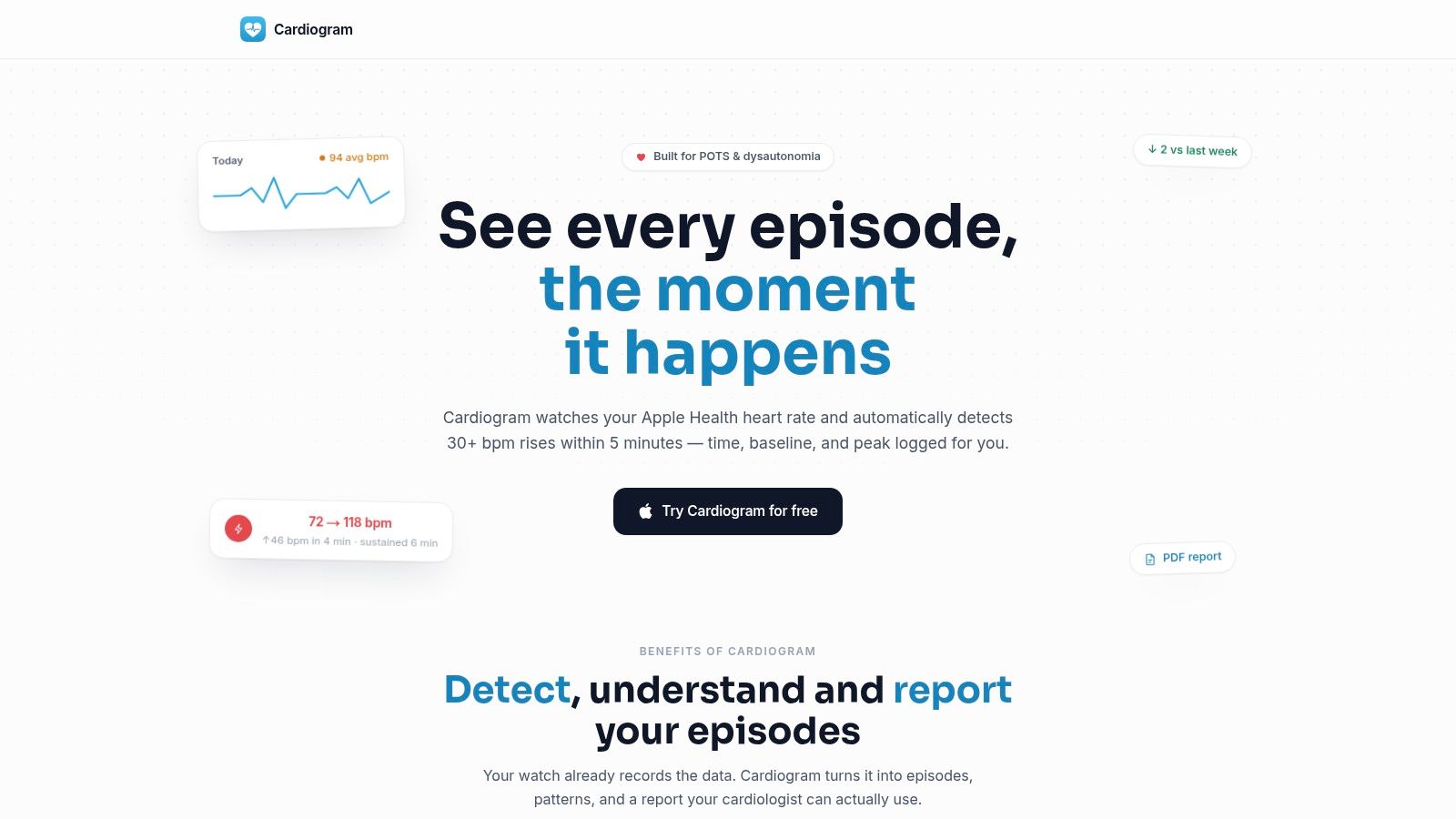
An app-assisted approach can review a broader stream of watch data. Cardiogram detects heart rate rises of 30 or more beats per minute within 5 minutes, recording the baseline, peak, duration, and time of an episode, as described in its Apple Watch heart rate tracking guide. It can also let you associate symptoms and context with episodes, while filtering out workouts and recovery periods from episode counts.
Use continuous data as context, not a diagnosis
The useful combination is deliberate testing plus everyday observation. Use the standing test when you need a reproducible protocol. Use watch history to show whether similar episodes happen at other times and to connect heart rate with dizziness, fatigue, palpitations, brain fog, sleep, hydration, salt intake, or medication notes.
A weekly summary, resting heart rate trend, episode heatmap, or exportable report can make a long symptom history easier to discuss. Still, watch data doesn't measure blood pressure, confirm cardiac rhythm in every situation, or replace a clinician's evaluation. Treat the app record as organized evidence for a conversation, not as a diagnosis generated at home.
Common Pitfalls and How to Avoid Them
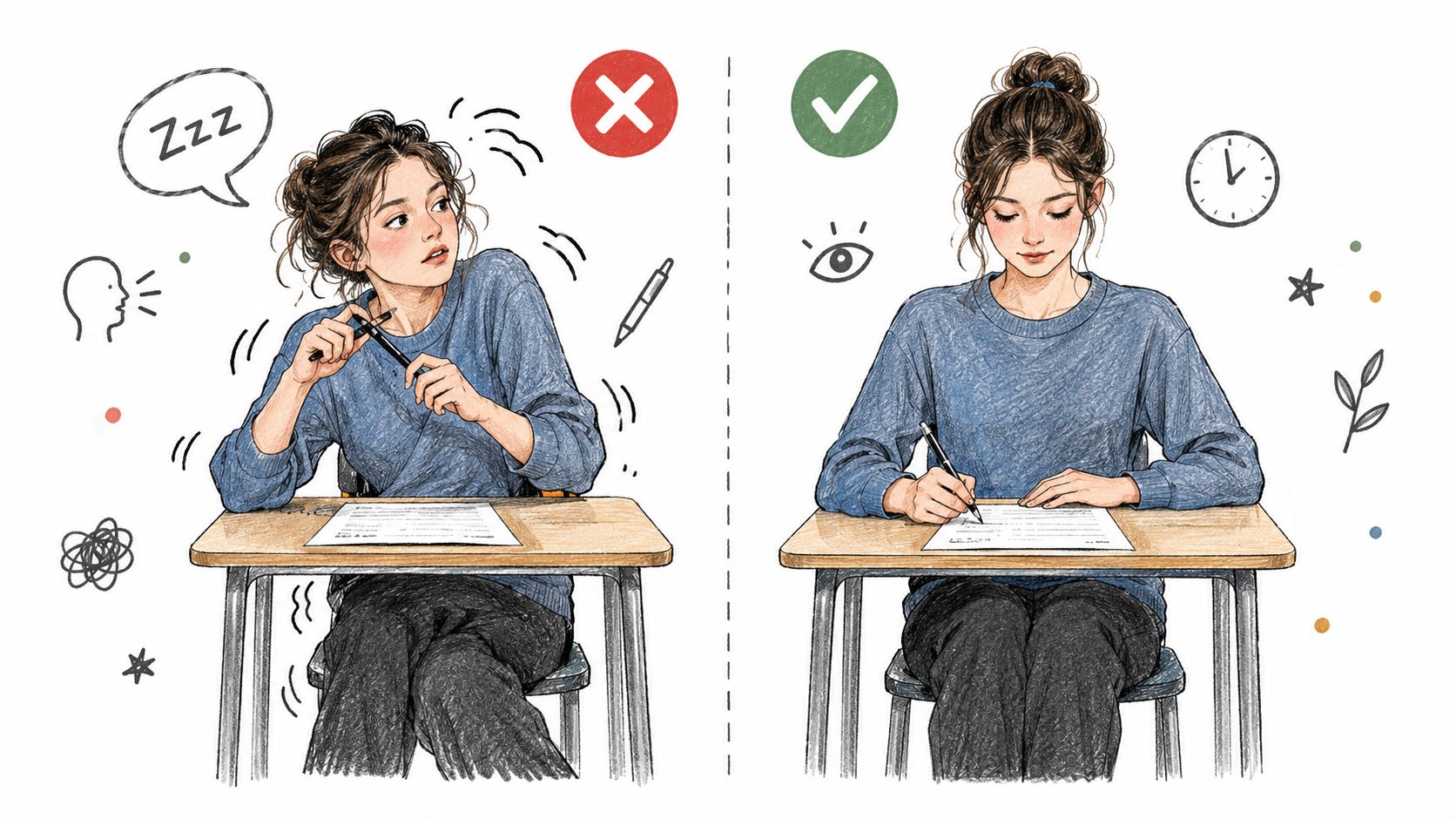
The most common errors are surprisingly ordinary. People stand before they've rested, talk through the measurement, shift their weight, or stop once the first uncomfortable symptoms appear. Each choice can make the heart rate pattern harder to interpret.
Control the test environment
Choose a quiet room and keep the equipment within reach before you lie down. Have someone nearby if standing can make you faint, and position yourself where you can sit or lie down safely. Use a timer so your readings correspond to the intended intervals rather than approximate moments.
Avoid changing your usual routine in ways your clinician hasn't requested. In particular, don't alter prescribed medication, deliberately load salt, or make unusual hydration changes without medical guidance. Those decisions can affect your symptoms and may make the test less representative of your normal experience.
Protect the quality of each reading
- Rest fully: Begin from a genuine supine baseline rather than a brief pause after walking into the room.
- Keep your posture stable: Don't lean, march in place, cross your legs, or repeatedly shift your weight.
- Stay quiet: Talking can change your heart rate and distract you from recording symptoms accurately.
- Measure long enough: Stopping early can miss a later response, particularly when symptoms build gradually.
- Check blood pressure too: Heart rate alone can't show whether orthostatic hypotension is present.
- Check watch fit: Keep the Apple Watch snug and avoid starting an exercise mode during the test unless your clinician specifically instructs you to do so.
If the watch shows an unexpected spike, first ask whether you moved or whether the sensor lost contact. Don't delete the event automatically. Mark the circumstances, repeat the protocol on another day if your clinician recommends it, and bring both the clean and questionable readings for comparison.
Documenting and Sharing Results with Your Clinician
A clinician can do more with a timeline than with a screenshot of one high pulse. Start each entry with the date and the reason for testing. Then list your supine baseline, each standing time point, blood pressure where available, symptoms, and the moment you sat or lay down.
Use plain descriptions. “Dizziness began after standing and increased during the later readings” is more useful than “felt bad.” Also note whether the episode followed sleep disruption, illness, a meal, heat exposure, activity, or a medication change, but don't assume any one trigger proves the cause.
Build an appointment-ready record
Bring the following:
- The complete test log: Include every available reading, not only the maximum.
- Symptom timing: Mark when palpitations, dizziness, fatigue, visual changes, or brain fog started and whether they improved after sitting or lying down.
- The measurement conditions: Record the rest period, posture, device used, and whether blood pressure was measured.
- Longer-term patterns: Add watch-based episode summaries and notes from ordinary daily activities.
- Your questions: Ask what the pattern suggests, what alternative explanations need review, and whether further testing is appropriate.
If you use the app-assisted workflow described earlier, export its PDF report before the appointment and check that the dates and notes are correct. The report can consolidate detected episodes, trends, and logged context into a format that's easier to review than several disconnected screenshots.
Don't ask your clinician to accept an app's threshold as a diagnosis. Ask them to interpret the pattern against the appropriate standing protocol, blood pressure findings, symptoms, medical history, and any medications that may affect heart rate. That distinction keeps technology useful without giving it more authority than it has.
Key Takeaways and Next Steps for Your POTS Journey
A standing heart rate test is most useful when you treat it as a structured observation, not a race to find the highest number. Rest flat, record a clear baseline, stand safely, remain still, measure through the full observation period, and capture blood pressure and symptoms alongside heart rate.
Continuous Apple Watch data can add the missing everyday context. It may show whether episodes recur outside a planned test, when symptoms tend to appear, and which patterns are worth discussing. The record becomes stronger when you label episodes consistently and separate controlled test results from ordinary activity.
Keep these principles in view:
- A number needs a timeline: The change from supine to standing and its persistence matter.
- Heart rate isn't the whole assessment: Blood pressure, symptoms, rhythm, medications, and other causes all belong in the conversation.
- Home monitoring has limits: It can organize evidence, but it can't independently diagnose POTS.
- A concerning episode deserves care: Seek prompt medical attention for fainting, chest pain, severe shortness of breath, new neurological symptoms, or a sustained or markedly irregular heartbeat.
Take your log to a healthcare professional familiar with orthostatic symptoms. Ask whether your pattern supports further evaluation, such as formal autonomic testing or another clinically appropriate assessment. Careful documentation won't answer every question, but it can make the next appointment more focused and productive.
Cardiogram turns Apple Watch heart rate history into organized episodes, trends, symptom context, and a shareable report for discussions about standing symptoms. Visit Cardiogram to see how it can help you track daily patterns alongside your clinical standing heart rate test.