You stand up after lunch, your watch jumps, and the room tilts. Nothing obvious changed. You drank something, you were not sprinting, and yesterday at the same hour you felt fine. POTS triggers often look random until you put the heart-rate rise next to what you were doing in the minutes before it.
A formal diagnosis is not a single high pulse. In adults, POTS means a sustained rise of at least 30 beats per minute within 10 minutes of standing, or at least 40 bpm from ages 12 to 19, without sustained orthostatic hypotension, plus chronic orthostatic symptoms, as described in a clinical review of diagnostic criteria. Exercise alone does not meet that test. Symptoms are generally expected for at least six months.
Onset is a different question from today's flare. In the international survey behind The Face of POTS, 1,933 participants (41% of that cohort) said symptoms began within three months of a specific event, and infection was the most common of those reports. Episode triggers, such as posture, heat, meals, and fluids, still vary from person to person.
The eight causes below are the ones I ask people to test first. For each one you will see what it does, what to write down, which weekly view to open, and what to hand a clinician. Salt targets and any medication change stay with that clinician.
1. Dehydration and Low Blood Volume
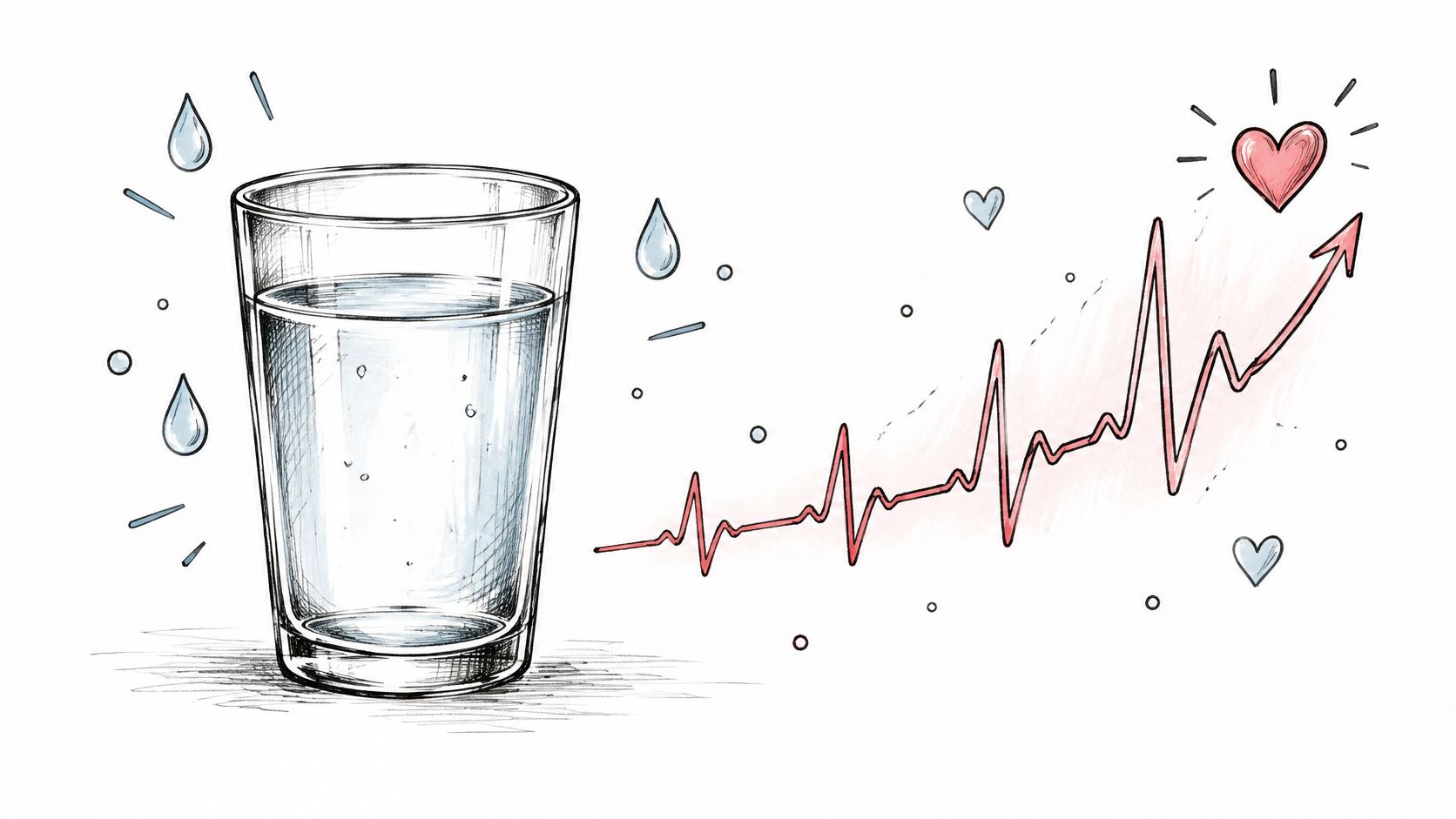
Low fluid intake shrinks plasma volume. Less blood returns to the heart when you stand, stroke volume drops, and heart rate climbs to make up the difference. That is why the same kitchen counter can feel easy on a well-hydrated morning and awful after a dry commute.
Dehydration, heat, prolonged lying down, alcohol, menstruation, and acute exercise can all worsen symptoms, which is why an expert review of evaluation and management treats context as part of the workup, not a side note. Day-to-day swings often track fluids more than a new disease phase.
Say your afternoon episodes pile up on days you logged one bottle before noon. Do not decide from one bad Tuesday. Mark water at the same times for two weeks, then open the weekly summary and see whether the spikes follow thin mornings.
What to write beside the episode
- Fluid timing: Note ounces and the clock, not a vague "I drank enough."
- Loss days: Flag heat, travel, vomiting, or a long meeting with no bottle.
- What you pair with water: Plain water and an electrolyte drink are not the same experiment. A clinician should set any salt plan. Our notes on hydration and heart rate walk through why volume and pulse move together.
Practical rule: If the weekly view shows afternoon spikes only after low morning intake, bring that page, not a memory of "I think I was thirsty."
2. Low Dietary Sodium Intake
Sodium helps you hold fluid inside the bloodstream and supports vascular tone. When intake is thin, volume can fall and the standing pulse can jump even if the water log looks decent. Needs differ widely. I do not hand out a gram target. That decision belongs with your clinician, especially if you have blood pressure disease, kidney disease, or heart failure.
Restaurant meals and "just a few chips" wreck casual estimates. Log salty food the day you eat it, including takeout. Then compare low-salt days with episode counts over several weeks. Effects are sometimes next-morning, not instant, so a single dinner is a weak test.
A caregiver can export the same week and sit with the cardiologist while the target is adjusted. The report is a conversation starter, not a prescription.
Do not blame the food until you split the variables
Large or high-carbohydrate meals, alcohol, caffeine, dehydration, and low salt get lumped together in generic advice. In a 2024 cross-sectional survey summarized by a clinical trial listing, 25% of POTS patients named carbohydrate-rich meals as factors that worsen symptoms. Blood shifts toward the gut after a big meal. A smaller portion, fluids, and staying seated can change the same plate. Read more on whether salt helps with POTS before you rewrite your diet alone.
- Separate fields: Meal size, salt, fluid, and whether you stood right after eating.
- Appointment packet: The week of logs plus any home blood pressure readings.
3. Prolonged Standing and Orthostatic Stress
Standing still lets blood pool in the legs. In POTS the usual squeeze-back is weak, so heart rate rises and may stay high. Queues, lectures, retail floors, and bus stops do this every week. Walking is often easier than a locked-knee stand because muscle pumps move blood.
The NIH workshop summary on POTS keeps the adult benchmark at a sustained rise of at least 30 bpm within 10 minutes of standing or head-up tilt, generally 40 bpm in adolescents, and it stresses repeat readings rather than one spike. A five-minute alert can catch an early rise. It is narrower than that 10-minute window, so label it a screen, not a diagnosis. Note if blood pressure was missing.

A retail worker can line episode times against shift blocks and use the export when asking for a stool. A student can mark "lecture, standing, 25 minutes" and plan a seat. I would rather see three annotated events than a vague "standing is bad."
- Duration and place: Minutes upright, and whether you were still or shifting weight.
- Counter-moves: A short sit, leg cross, or calf squeeze. Log whether the pulse settled.
- Heatmap: Clustered late mornings may be the commute, not a new illness.
- Compression: Only after a clinician says the garment and pressure make sense for you.
4. Heat and Warm Environments
Heat opens skin vessels so you can dump warmth. Blood sits in the skin, central volume falls, and the standing rise gets steeper. Weather, a crowded room, a hot shower, a sauna, or a fever can all do it. Summer is often worse for the same person who managed fine in October.
Say July's monthly trend is denser than April, and the notes say "shower" or "platform, no shade." That is a pattern you can plan around. It is not proof that heat is your only POTS trigger.
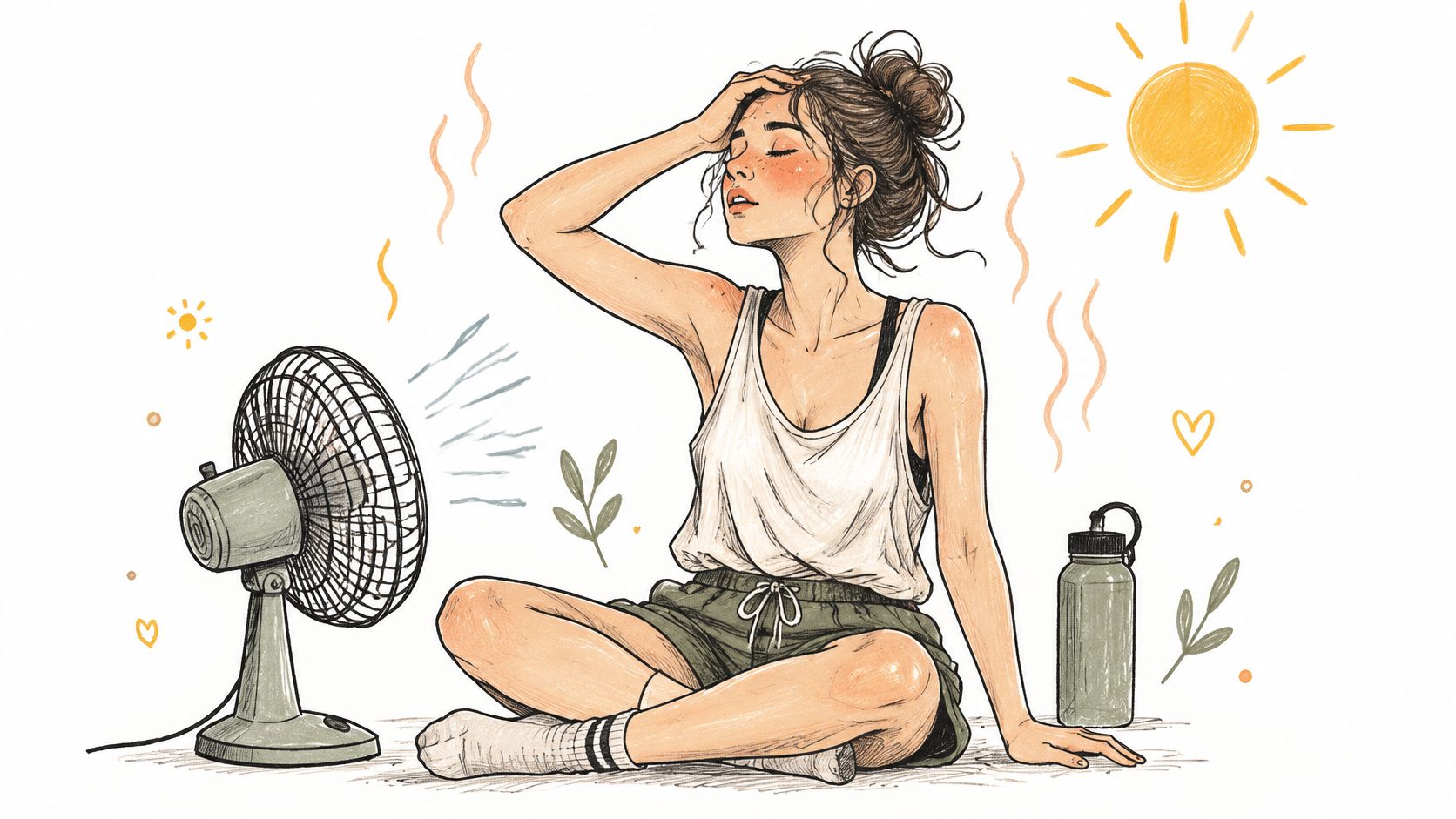
Cooling towels, a fan, and air conditioning are low-risk tests. Lukewarm showers beat steam if warm water is the repeat offender. Before a hot-climate trip, compare last summer's timing with your fluid log so you pack for the failure mode you had.
Heat plus a long stand is a different event from heat while you are seated. Write both, or the weekly view will blame the weather for a posture problem.
Bring the seasonal comparison to the visit if you are deciding on travel, a cooling vest, or a note for work about outdoor shifts.
5. Physical Exertion and Deconditioning
Exercise is the awkward one. A hard or sudden effort can spike heart rate, raise core temperature, and leave you worse for hours. The same person often needs gradual reconditioning because a deconditioned system handles standing poorly. Quitting movement feels safer in the short run and usually costs you later.
What does not work is treating every workout pulse as an orthostatic episode. Acute exercise is a known confounder. If your log keeps those rises out of the episode count, you can show a therapist the orthostatic events separately from the session itself.
A supervised plan might use recumbent cycling, rowing, or swimming once a clinician clears it. You note how you feel in the hour after, not only the peak during the set. If recovery crashes stack up, you do not add minutes next week.
How to progress without fooling the count
- Exclude the workout: Keep training heart rates out of the orthostatic tally.
- Recovery note: Dizziness, fatigue, or a second rise after you stop.
- Small steps: Add time or load only after the trend is stable.
- A paced plan: The Levine protocol for POTS is one structured path to discuss with the person supervising you, not a solo challenge.
I recommend you treat a post-exercise crash as data, then slow the next session, rather than as proof you "can't exercise."
6. Viral Infections and Acute Illness
During a respiratory illness or stomach bug, fever and reduced intake can make standing symptoms more noticeable. Vomiting and diarrhea can add to the strain. Record the illness alongside your symptoms so the timing is clear.
A 2025 Australian registry report in the Medical Journal of Australia found that infection was the most frequently reported trigger of symptom onset: 197 people (39.4%). SARS-CoV-2 accounted for 163 cases (32.6%). These figures describe reported onset among registry participants. They do not establish how an individual's symptoms will change during or after an illness.
Log fever, respiratory symptoms, stomach symptoms, and days when standing feels harder. After recovery, keep noting your standing symptoms and compare them with your usual pattern. The return to baseline may lag behind the end of the acute illness. Bring that timeline, along with your pulse and symptom entries, to your clinician. Seek urgent care for chest pain, fainting, or severe symptoms.
An OHSU POTS presentation lists fever among factors that can aggravate symptoms, while distinguishing associations from established mechanisms. Include the illness week in the record you share with your primary clinician so they can review the symptom cluster and pulse pattern together.
7. Sleep Disruption and Sleep Deprivation
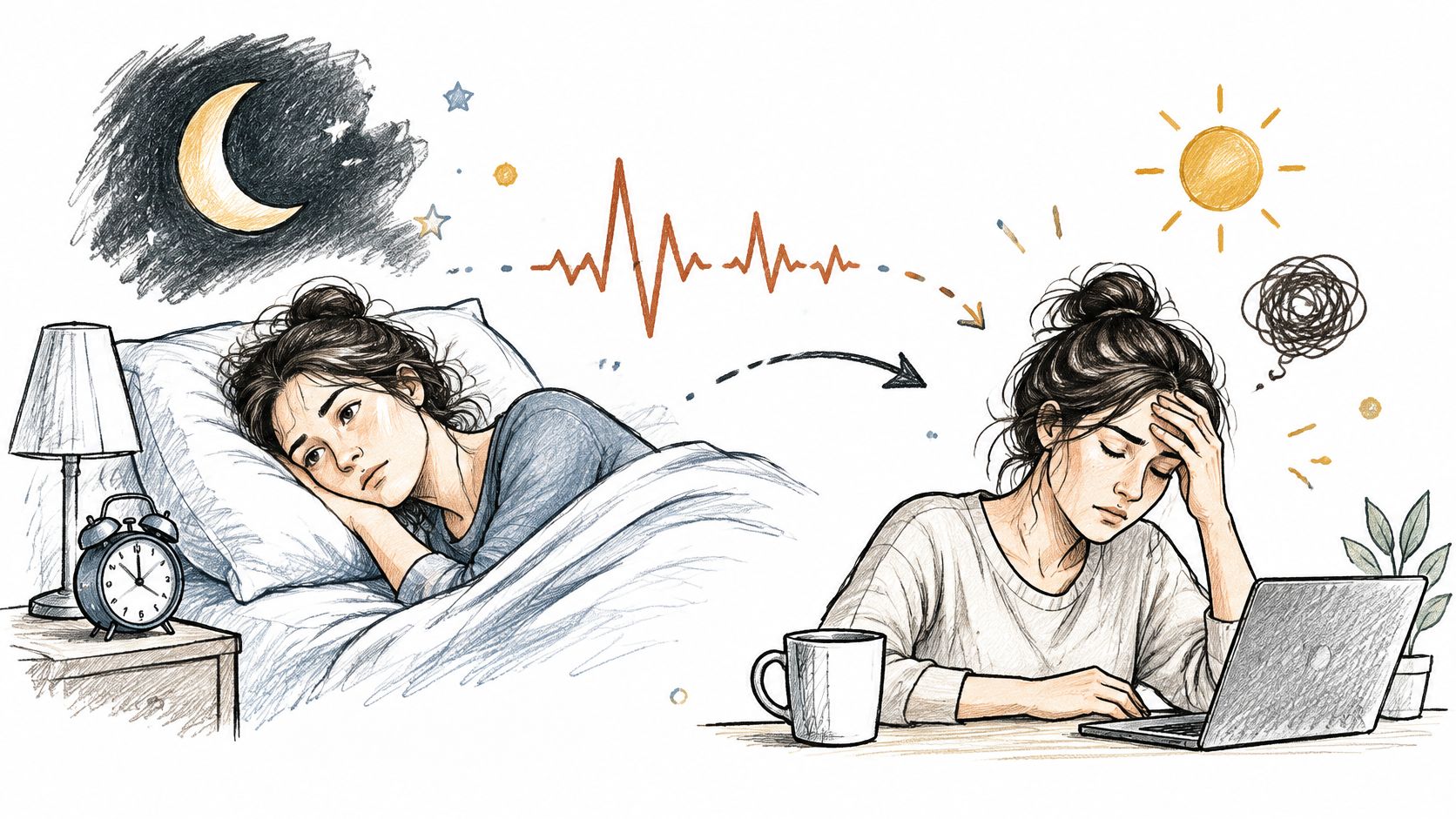
After a broken night, the first stand of the morning may bring heavier fatigue, brain fog, or more noticeable palpitations. Symptoms can also disrupt sleep, making it harder to tell which came first.
Track the pattern across at least three short or interrupted nights. Each morning, note sleep quality and awakenings, then check the weekly view for next-day episode counts and standing rises. A single late night is less useful than a repeatable pattern.
A morning routine you can actually test
- Sleep quality: Add a one-line note each morning; include awakenings you remember.
- Schedule: Keep sleep and wake times steady for two weeks, then compare the logged pattern.
- Naps: Record their timing. A late nap may affect that night's sleep and make an evening pattern harder to interpret.
- Specialist visit: If apnea or insomnia is a concern, bring the paired sleep and episode records to your clinician. Avoid self-treating.
Ask your clinician whether raising the head of the bed is appropriate for you, and how to set it up safely.
8. Medications and Medication Changes
Some drugs speed the heart, strip volume, or widen vessels. Stimulants, certain antidepressants, some antihistamines and decongestants, diuretics, and vasodilators show up often in these histories. A dose change can move the pattern within days. Over-the-counter products count. People forget the cold tablet and then hunt for a new food trigger.
Say you log a decongestant at 8 a.m. and the feed shows rises through the morning that were absent the week before. That timing is what you show a pharmacist or prescriber. It is not a reason to stop a prescribed drug on your own.
A cardiologist can line dose times against episode peaks and decide whether to adjust, swap, or watch. You do not make that call from the graph.
- Full list: Name, dose, clock time, including supplements and cold remedies.
- Before and after: A week on each side of a new prescription.
- Hold the prescription: Never stop or retitrate without the prescriber.
- Who reviews it: Prescriber or pharmacist, with the export in hand.
A new pill and a hot week can land on the same day. Log both, or you will retire the wrong one.
How the Eight Most Common POTS Triggers Compare
Choose what to investigate by asking which trigger is easiest to vary safely and record clearly. A daily pattern tied to standing or sleep may be easier to compare than a medication change, which needs a prescriber's input. For sodium and fluid adjustments, follow clinician guidance.
| Trigger | A practical first comparison | What to bring to an appointment |
|---|---|---|
| Dehydration and Low Blood Volume | Compare episode days with days when your fluid routine differed. | A short record of fluid intake and episode timing |
| Low Dietary Sodium Intake | Note whether symptom patterns differ across days with different usual meals. | Your food notes and questions about a safe sodium target |
| Prolonged Standing and Orthostatic Stress | Compare episodes during standing tasks with those during seated tasks. | The task, duration, and symptoms recorded together |
| Heat and Warm Environments | Compare similar routines in warmer and cooler settings. | When and where symptoms occurred |
| Physical Exertion and Deconditioning | Keep exercise sessions separate from ordinary upright activity in your notes. | Activity type, timing, symptoms, and recovery |
| Viral Infections and Acute Illness | Mark illness days and compare them with your usual pattern. | Illness timing and changes in symptoms |
| Sleep Disruption and Sleep Deprivation | Compare daytime symptoms after better and poorer nights of sleep. | Sleep notes alongside symptom timing |
| Medications and Medication Changes | Record dose and timing, then compare the pattern with your prescriber. | A complete medication list and episode timing |
Look for repeatable contrasts, not a single striking day. If two factors changed together, keep both in the record; the pattern may not identify which one mattered. Medication changes and sodium decisions belong with your clinician, not a self-directed experiment.
Turn Your Trigger List Into a Plan You Can Test
If your heart rate rises after a hot shower one day and after a poor night's sleep the next, start with the patterns you can track. Choose two or three likely triggers and log them for at least two weeks. Four weeks can help when the pattern follows a cycle, shift schedule, or changing weather.
A 2024 Journal of the American Heart Association survey found that among POTS patients who reported an onset trigger, 67.5% named one, 25.4% named two, 5.3% named three, and 1.8% named four. Onset triggers are different from day-to-day flare patterns, but the findings support starting with a short, specific list.
For each suspected trigger, record when it occurred and any symptoms that followed. Check the weekly summary for recurring timing, not just a higher average heart rate. A repeated afternoon cluster alongside low fluid intake gives you a clearer question to discuss at an appointment than one unusually difficult day. Treat matches as observations to confirm with your clinician.
Cardiogram is built for people with POTS and dysautonomia. Step 2 logs every 30+ bpm rise within 5 minutes with its baseline, peak, and duration, and lets you add symptoms as they happen. Use the episode record to compare timing with your trigger log. Bring the PDF to an appointment and ask which patterns are worth tracking further.
Ask your clinician before changing fluid or sodium intake, or adjusting medication timing. The right approach depends on your individual care plan.
Cardiogram turns Apple Watch heart-rate history into timestamped rises you can compare with logged context, including fluids, salt, standing, heat, sleep, illness, and medications. That record can help you bring specific questions about POTS triggers to an appointment. Visit Cardiogram to see how its episode feed and clinician PDF fit the logs you are already keeping.