A tachycardic episode at rest is usually a heart rate above 100 beats per minute, and one reading by itself doesn't tell you why it happened. What matters is the context, posture, symptoms, and whether the pattern repeats.
You may have been sitting still when your watch buzzed, then looked down and saw 110, 120, or higher. That moment can feel alarming, but the alert is data, not a diagnosis, and the difference matters.
Recognizing Your First Episode
You're on the couch, not running, not climbing stairs, not stressed in any obvious way, and your watch vibrates. The screen shows a heart rate that seems far too high for a quiet evening, and your first thought is usually the same one, “Something's wrong.”
That reaction makes sense. A resting heart rate above 100 beats per minute is generally considered tachycardia, but the number alone still doesn't explain the cause or the risk. A short burst after activity is very different from an episode that appears while you're doing nothing at all.
What a racing heartbeat can feel like in daily life can help you match the number on the screen with how your body actually feels.

What the alert does and doesn't mean
A wearable alert can be useful because it timestamps the event and shows you that your heart rate was higher when you weren't exerting yourself. That's valuable information, especially if it happens more than once.
Practical rule: treat the watch as a witness, not a verdict.
The first useful question is not, “Is this dangerous?” It's, “What was happening when this started?” If you were dehydrated, sick, anxious, or just got up from lying down, the episode may have a very different meaning than a rapid pulse that appeared out of nowhere.
Common Causes of Resting Tachycardia
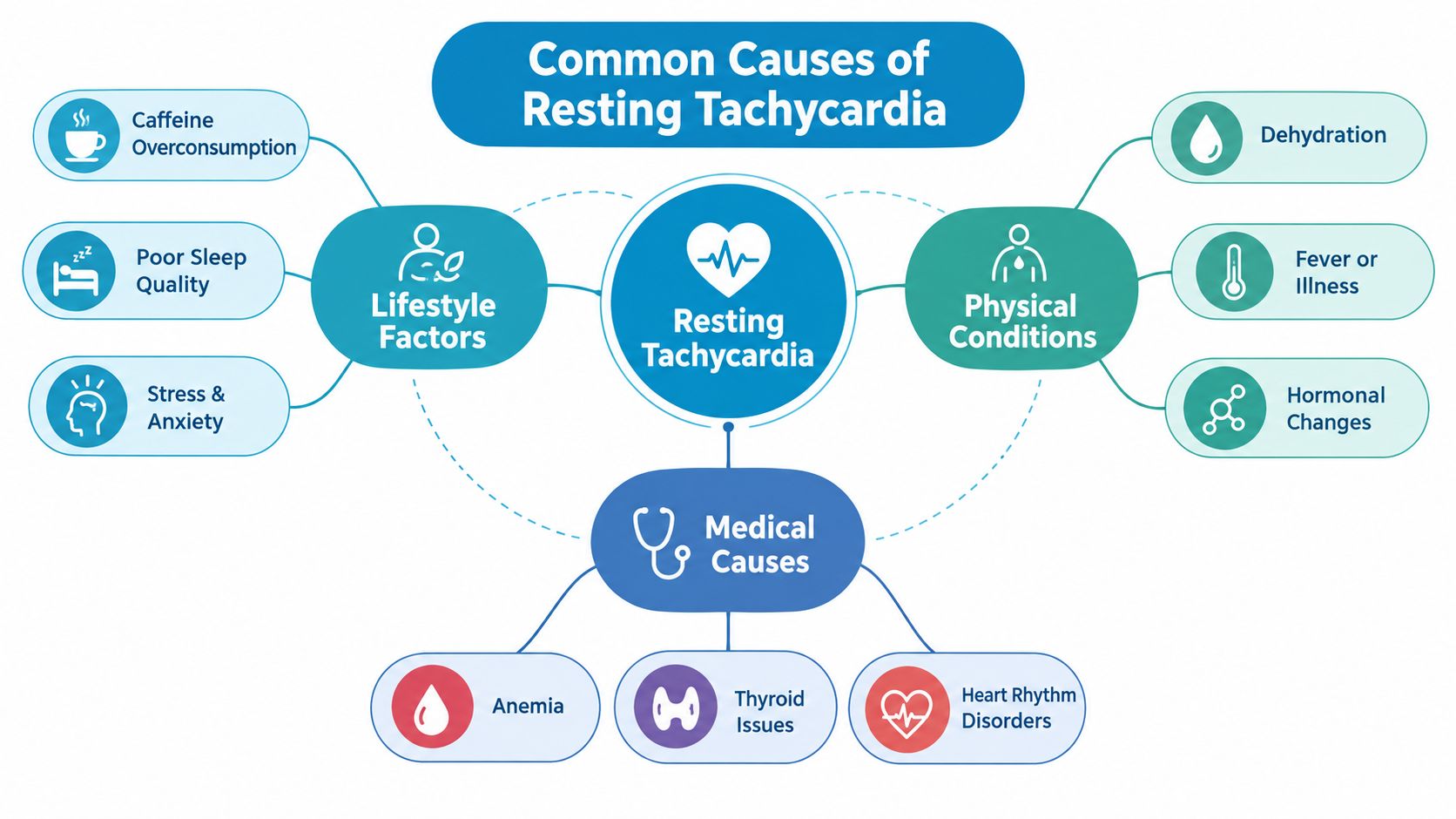
A fast heart rate at rest has a wide range of causes, and some are temporary while others deserve medical attention. Fever, dehydration, anemia, thyroid disease, stimulant use, medication effects, and acute cardiopulmonary illness can all make the heart beat faster without exercise. Clinical references also note that resting tachycardia can be an early sign of serious underlying pathology, so the pattern matters as much as the number.
The common, non-scary explanations
Some episodes make sense once you line them up with the day. A fever pushes the pulse up because the body is working harder. Dehydration can do the same, as can caffeine, nicotine, alcohol withdrawal, poor sleep, and pain.
Those triggers don't make the episode meaningless. They make it interpretable. If your heart rate settles after rest, fluids, or recovery from illness, that points toward a temporary physiologic response rather than a primary rhythm disorder.
When the cause needs a closer look
A resting fast pulse that keeps happening without an obvious trigger deserves more attention. That's especially true if you notice weakness, blurred vision, exercise intolerance, fatigue, or light-headedness alongside the number on the screen.
Some episodes reflect rhythm problems rather than just a faster sinus rate. Others reflect autonomic dysfunction, where the heart rate responds abnormally to posture or stress. The important point is that the same watch reading can come from very different mechanisms, which is why a single graph can't tell the whole story.
Why unexplained tachycardia needs context is worth reading if you've had repeated episodes without a clear trigger.
A simple way to sort the possibilities
- Lifestyle triggers: caffeine, poor sleep, stress, alcohol, nicotine.
- Body stressors: fever, dehydration, pain, illness.
- Medical causes: anemia, thyroid disease, medication effects, rhythm disorders.
If episodes keep showing up, your notes about posture, symptoms, and timing become more valuable than the peak number itself.
POTS vs Inappropriate Sinus Tachycardia
POTS and inappropriate sinus tachycardia can both look like “my heart is racing for no reason,” but they're not the same problem. POTS is defined by what happens when you stand up. Inappropriate sinus tachycardia is more about a persistently fast sinus rate that isn't explained well by posture alone.
The Dallas protocol for POTS is useful background if you're trying to understand posture-based testing.
| Feature | POTS | Inappropriate Sinus Tachycardia |
|---|---|---|
| Main trigger | Standing up or head-up tilt | Often present at rest, not tied only to standing |
| Core heart-rate pattern | Sustained increase of at least 30 bpm in adults, or at least 40 bpm in adolescents aged 12 to 19, within 10 minutes of standing, without orthostatic hypotension | Sinus tachycardia that stays inappropriately fast without a simple postural explanation |
| Blood pressure | No qualifying orthostatic blood-pressure drop | May be normal or variable, depending on the person |
| Symptoms | Light-headedness, palpitations, weakness, blurred vision, exercise intolerance, fatigue | Palpitations, fatigue, and discomfort that may occur even while seated or resting |
| What the pattern means | Orthostatic intolerance pattern | A fast sinus rate that isn't adequately explained by posture alone |
Why posture changes the interpretation
If your watch shows a fast pulse after you stand, that may point toward an orthostatic problem. If it shows a fast pulse while you've been sitting still for a while, posture is less likely to be the main driver.
That difference sounds small, but it changes the clinical question. One pattern asks, “What happens when blood pools after standing?” The other asks, “Why is the sinus node firing too quickly even without that postural trigger?”
A watch can show timing and rate, but it can't tell you whether the blood pressure changed at the same moment.
That's why the same heart-rate graph can feel persuasive and still be incomplete.
How Cardiogram Tracks Your Episodes
Cardiogram turns Apple Health heart-rate data into structured episodes by looking for a 30+ bpm rise within five minutes and recording the baseline, peak, sustained duration, and time of occurrence. It also filters out workouts and recovery periods, which matters because exercise can otherwise make a normal increase look like a problem.
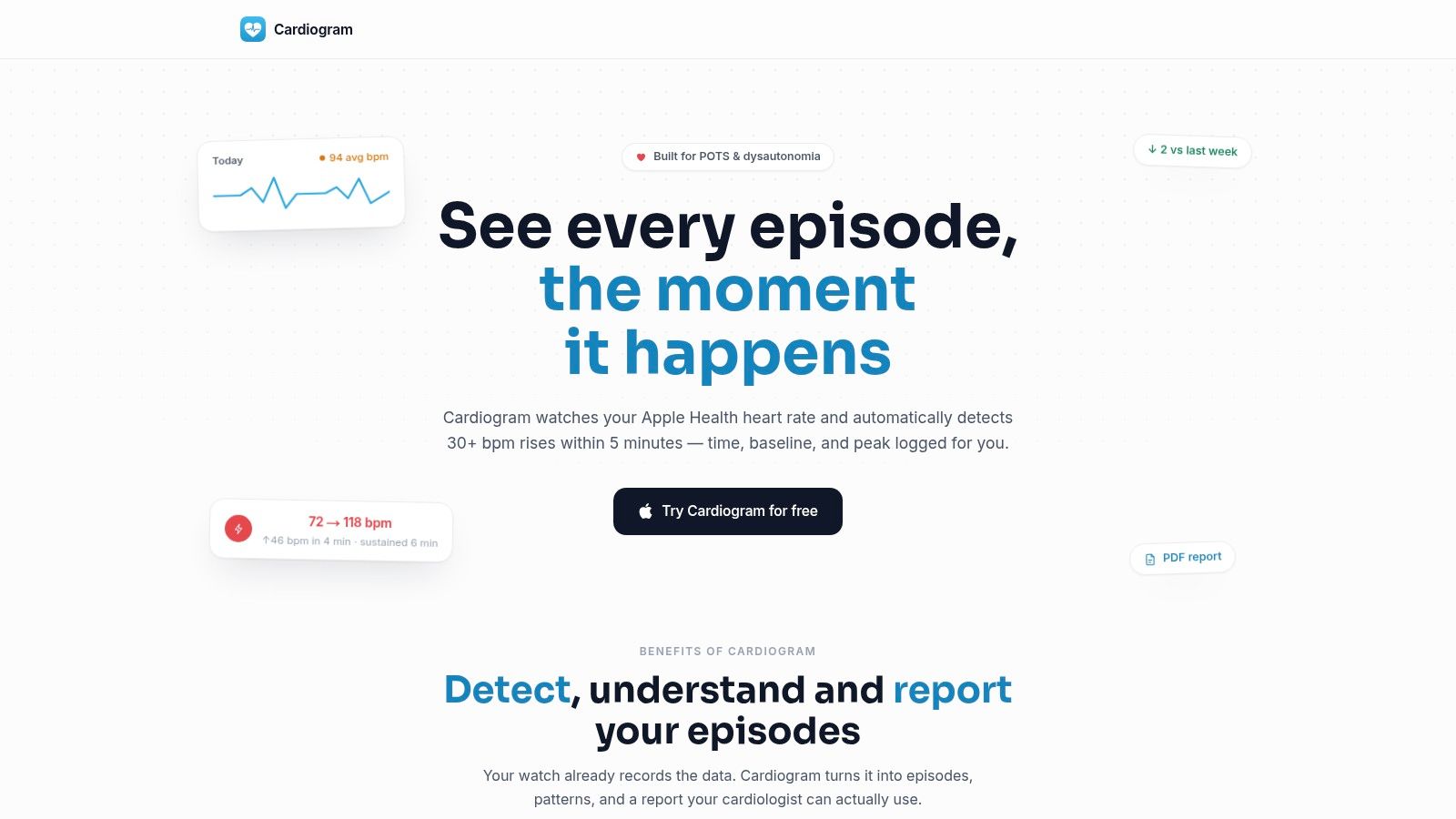
What to look for in the episode feed
The useful part isn't just the peak number. It's the shape of the episode. A brief spike that fades quickly tells a different story than a sustained rise that sticks around and repeats in similar situations.
Look for three things together, baseline, peak, and duration. Then add what you were doing, whether you had symptoms, and whether you'd recently stood up, eaten, hydrated, or taken medication.
Why symptom logging matters
A graph without symptoms is only half the story. If your pulse rises and you also feel dizzy, shaky, short of breath, or foggy, that combination is more useful than the rate alone.
Cardiogram lets you attach those details to the episode itself, which makes later review much easier. Over time, the pattern can show whether your episodes cluster around dehydration, poor sleep, missed meals, or posture changes.
A practical way to use the data
- Check the timing: note when the episode started and how long it lasted.
- Record the context: posture, activity, hydration, sleep, and medications.
- Capture symptoms: palpitations, dizziness, fatigue, breathlessness, or chest discomfort.
- Keep the focus on patterns: one alert is informative, repeated alerts tell a story.
Practical rule: the best episode log reads like a short clinical note, not a screenshot dump.
That's the point of structured tracking. It helps you turn a confusing alert into a record a clinician can use.
Preparing for Your Doctor's Appointment
A good appointment starts before you walk in. If you bring a clear history, your clinician can spend less time guessing and more time deciding what testing, if any, makes sense.
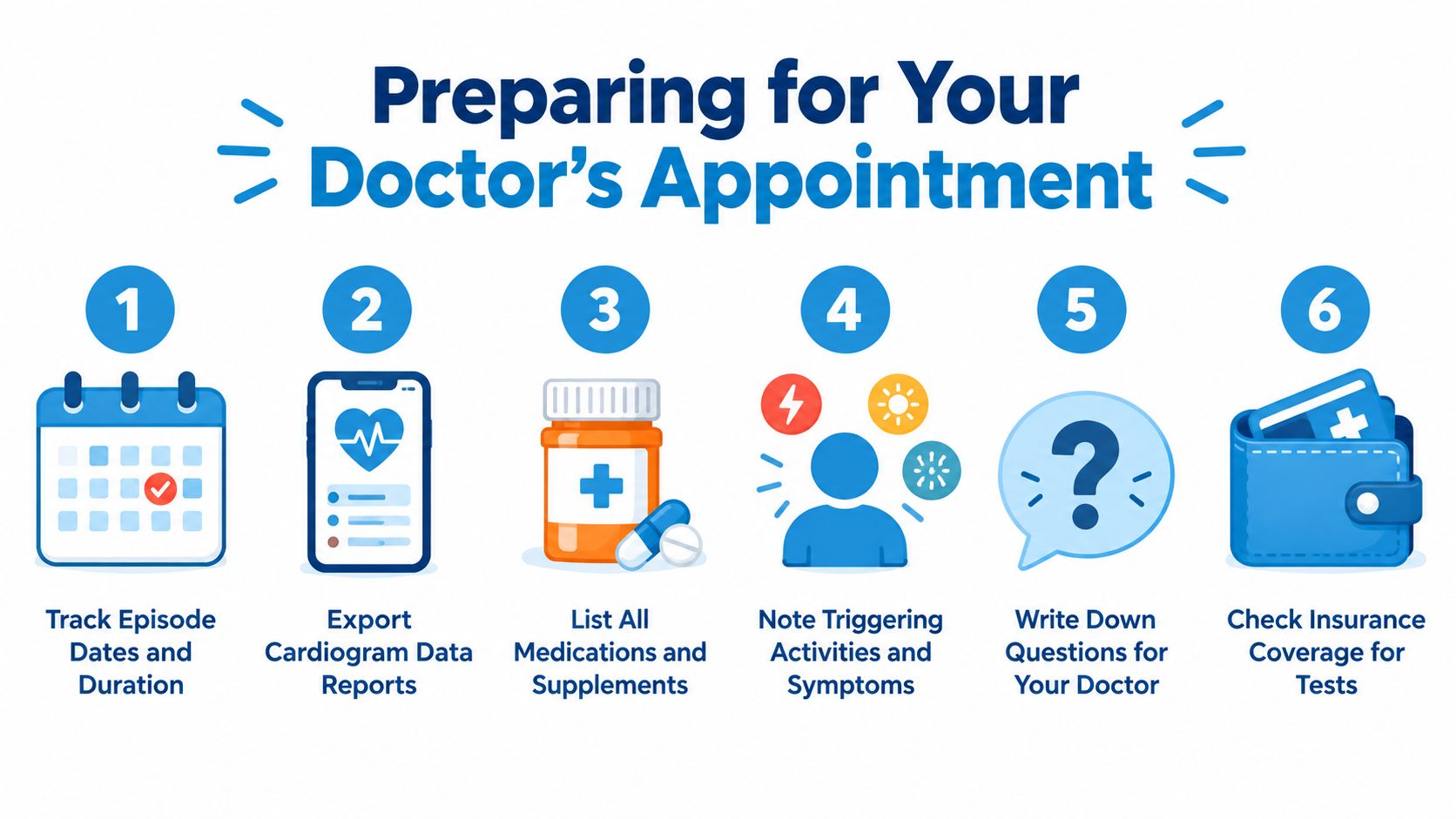
What to bring with you
Your episode log should answer the basic questions quickly. When did it happen, what were you doing, how high did the rate go, and what did it feel like? If you can answer those without searching through scattered screenshots, the visit becomes much more productive.
Cardiogram can export a PDF report that summarizes episodes, trends, and the detection rule used, which makes the discussion easier to follow. That kind of summary is especially helpful when episodes are repetitive but not constant.
How to frame the conversation
Start with the episodes that worry you most. Mention any chest pain, fainting, severe shortness of breath, or sustained symptoms first. Then show the pattern, not just the highest number.
A short list works well:
- When it happens: standing, resting, after meals, at night.
- What it feels like: fluttering, pounding, dizziness, weakness, or breathlessness.
- What makes it better or worse: fluids, rest, sleep, caffeine, stress, illness.
- What else is on the timeline: medications, supplements, and recent changes in health.
The goal isn't to diagnose yourself. It's to make sure the clinician sees the same pattern you've been noticing.
Limitations and Warning Signs
The measurement problem becomes impossible to ignore here. A watch can identify a fast heart-rate pattern, but it can't measure blood pressure directly, verify posture perfectly, or confirm the rhythm mechanism behind the number.
That's why a POTS-like alert can happen even when a clinic test looks normal, or why a person can feel terrible and still not trigger a neat watch pattern. Day-to-day variation, hydration, illness, sensor contact, and sampling gaps all affect what the device sees.
What the wearable can't decide
Standard POTS assessment starts after time spent supine, then checks heart rate and blood pressure after standing at timed intervals. Tilt-table testing is also used as a reference assessment. A watch rule that looks for a rapid rise can be useful for pattern-finding, but it does not prove the full diagnosis on its own.
Heart-rate trends alone also can't tell you whether the rhythm is sinus tachycardia or something else. That distinction matters, because arrhythmias need rhythm characterization, not just a higher number.
When to stop watching and get medical help
Seek prompt medical attention if tachycardia comes with chest pain, fainting, or severe shortness of breath. Sustained symptomatic tachycardia also deserves urgent review, especially if the episode doesn't settle or the person looks unwell.
If the fast pulse is happening with collapse, chest pressure, or trouble breathing, the app is not the next step. Medical care is.
That rule is simple because the stakes are simple. Some episodes can wait for documentation. Others can't.
Cardiogram helps you document episodes of tachycardia at rest, separate resting patterns from workout-related rises, and bring a cleaner history to your clinician. If your watch keeps flagging episodes and you want a structured way to track posture, symptoms, and timing, visit Cardiogram and see how it organizes the data you're already collecting.