You stand up from the sofa and your heart suddenly pounds. A few seconds later, dizziness washes over you, your vision feels less clear, and your thoughts slow down. Sitting or lying back down helps, but the pattern keeps returning, so you start wondering whether it's dehydration, anxiety, poor fitness, or something more serious.
Postural orthostatic tachycardia syndrome, usually shortened to POTS, can create exactly this experience. It's a disorder of the autonomic nervous system, the system that automatically adjusts heart rate, blood pressure, blood flow, digestion, and other functions when your body changes position. The symptoms are real, measurable, and often easier to understand when you connect them to posture rather than viewing each complaint separately.
What Postural Orthostatic Tachycardia Syndrome Actually Feels Like
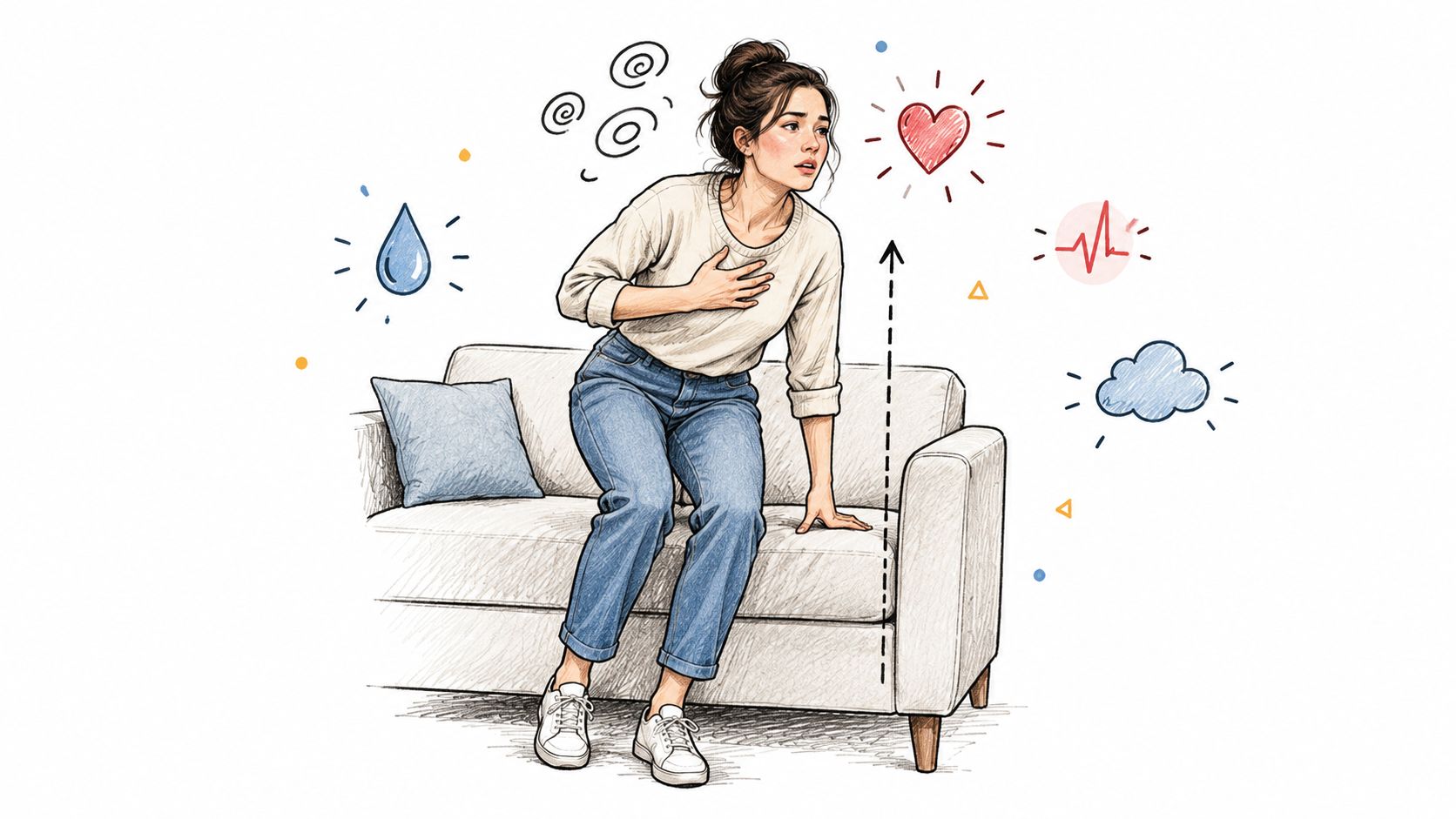
A typical episode may begin during an ordinary activity. You get out of bed, wait in a queue, take a warm shower, or stand in the kitchen. Your heart rate rises, your legs may feel weak or heavy, and you might develop lightheadedness, shakiness, fatigue, nausea, headache, or “brain fog.” Some people feel close to fainting, while others mainly notice pounding palpitations and an inability to think clearly.
The defining clue is often position. Symptoms become worse while sitting or standing and improve when you lie down. That pattern separates POTS from ordinary tiredness, although fatigue can be part of POTS, and from an isolated episode of palpitations. It also helps explain why a routine appointment, when you've been sitting still, may not capture what happens during daily life.
Practical rule: A racing heart matters clinically when you record what happened before it, how your posture changed, how long it lasted, and whether symptoms appeared at the same time.
POTS doesn't mean that every fast heartbeat is caused by POTS. Heat, illness, dehydration, stress, exertion, anemia, thyroid problems, medication effects, and heart-rhythm disorders can produce overlapping symptoms. A clinician must consider those possibilities rather than treating a watch reading as a diagnosis.
Modern diagnostic framing dates to 1993, when Schondorf and Low described a posture-related heart-rate response using objective thresholds and the absence of orthostatic hypotension. Later reviews retained that criterion-based approach and emphasized sustained tachycardia and chronic symptoms. The history is important because it established POTS as a recognizable syndrome, not a vague collection of dizziness and anxiety complaints. You can read a detailed overview of orthostatic tachycardia symptoms to compare the pattern with your own experience.
A structured evaluation gives your clinician more than a single pulse number. It shows whether the response is repeatable, whether blood pressure changes, and whether symptoms track with upright posture. That's why careful monitoring can be useful before and after diagnosis.
Causes, Prevalence, and Who Gets Diagnosed
Standing shifts blood toward the legs and abdomen. The autonomic nervous system normally responds by tightening blood vessels and adjusting heart rate, helping maintain blood flow to the brain and upper body. In POTS, that response may not provide enough support.
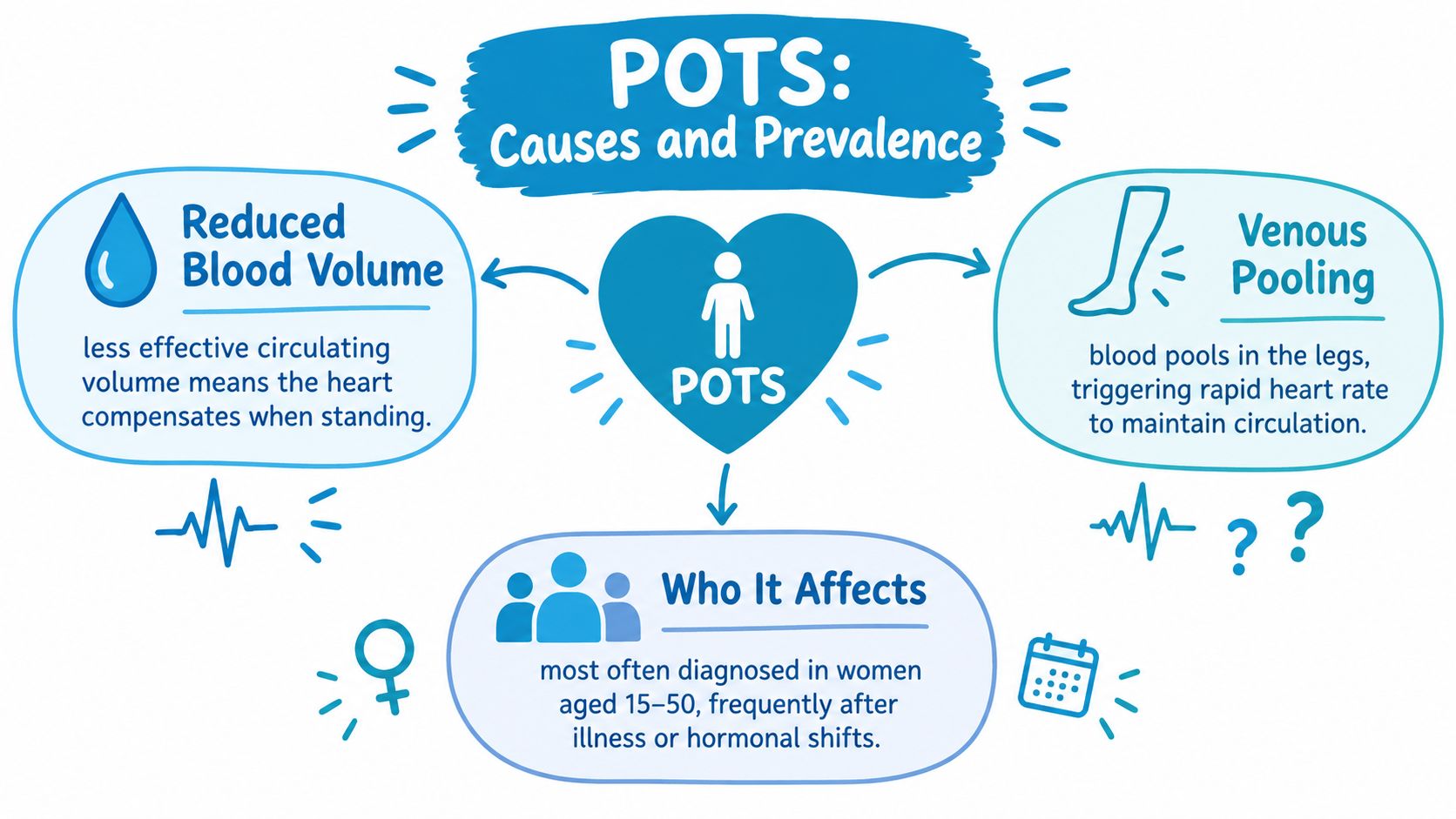
Circulation depends on both fluid volume and vessel tone. If plasma volume is low or lower-body vessels fail to constrict, blood can pool below the heart, and the heart beats faster to compensate. One expert review reported an average plasma-volume deficit of about 13%. Another described uneven sympathetic nerve dysfunction in the extremities and kidneys, which may contribute to low blood volume, venous pooling, and compensatory tachycardia. These mechanisms are summarized in a clinical review of POTS physiology.
Why the numbers are difficult to pin down
POTS is uncommon but not rare. Estimates cluster around 0.2% in older United States and review-based research, while broader summaries place prevalence between 0.2% and 1.0% in developed countries. Depending on the population and method, estimates represent roughly 500,000 to 1,000,000 people in the United States, while one review translated broader estimates into as many as 3 million Americans. The range reflects differences in definitions, study settings, and clinical data sources, as discussed in the JACC Focus Seminar on POTS.
The diagnosed population also shows a marked age and sex pattern. A major review reported that approximately 75% to 80% of patients are female, with many diagnoses occurring between ages 15 and 25. A community-based cohort cited in a later review found that 93% of 4,835 survey participants were white women of child-bearing age, and half reported symptom onset in adolescence by age 14. These findings describe particular study groups, not the definition of POTS. Men, older adults, and people from every background can develop it. Read about whether postural orthostatic tachycardia syndrome is genetic to understand what family history may mean.
Why onset and misdiagnosis vary
Symptoms may build gradually or begin after an illness, injury, hormonal change, prolonged inactivity, or another major physical stressor. A trigger can help explain when symptoms started, but it does not establish the diagnosis.
Dizziness, fatigue, palpitations, shortness of breath, gastrointestinal symptoms, and anxiety-like sensations occur in many conditions. Continuous Apple Watch readings organized with Cardiogram can help show whether symptoms repeatedly accompany upright activity, but those records remain supporting evidence. The diagnosis depends on the overall upright pattern, objective heart-rate response, blood-pressure findings, symptom duration, and exclusion of alternative causes.
Diagnostic Criteria, Tests, and Common Pitfalls
Clinicians usually begin with a careful history, medication review, physical examination, and measurements taken while you're lying down and upright. The central question is whether standing produces a sustained, symptom-linked heart-rate rise without orthostatic hypotension.
For adults, the commonly used threshold is a rise of at least 30 beats per minute within 10 minutes of standing from a supine position. For patients under 19, the threshold is at least 40 beats per minute. Symptoms should worsen upright and improve when recumbent, and the response shouldn't be explained by a substantial fall in blood pressure. These criteria and the recommended measurement sequence are described in this review of POTS diagnosis and management.
What the standing assessment involves
A clinician may use an active standing test or a tilt-table test. The practical sequence often looks like this:
- Rest supine first. Heart rate and blood pressure are measured after at least five minutes lying down.
- Stand or tilt upright. Measurements are repeated at one, three, five, and ten minutes.
- Record symptoms alongside readings. Dizziness, palpitations, weakness, nausea, visual changes, and brain fog help establish clinical relevance.
- Assess the blood-pressure response. A heart-rate rise without orthostatic hypotension supports the POTS pattern, while a significant pressure drop points toward a different orthostatic disorder.
- Repeat or extend testing when needed. Intermittent symptoms may not appear during a short or poorly timed visit.
A normal electrocardiogram or routine blood test doesn't rule out POTS. Those tests may still be valuable because they can help identify anemia, thyroid disease, dehydration, medication effects, infection, electrolyte problems, or another explanation for tachycardia. Additional autonomic or cardiac testing depends on the history and examination.
Why diagnosis can take so long
Diagnostic delay remains a major problem. A 2026 chart audit found that most patients underwent five to eight tests, about 80% received an incorrect diagnosis before confirmation, and 25% waited more than a year for a diagnosis. Those figures come from the 2026 state-of-the-art review and chart-audit report.
A single clinic pulse reading can miss the pattern entirely. Home data won't establish the diagnosis by itself, but a dated record of posture, symptoms, and repeated heart-rate changes can help a clinician decide whether formal orthostatic testing or referral is appropriate. You can also learn how clinicians interpret orthostatic heart-rate change in context.
Treatment Strategies and Self-Management Options
POTS treatment usually works best as a layered plan rather than a single prescription. The first layer supports circulation and reduces common triggers. The next addresses the dominant symptom pattern. The final layer consists of daily pacing and monitoring, which helps you and your clinician judge whether the plan is working.
Foundations come first
Many patients discuss hydration, salt intake, compression garments, and carefully supervised physical training with their clinician. These measures aren't appropriate in the same way for everyone, especially people with conditions that make extra fluid or salt unsafe.
Compression can reduce lower-body pooling. Physical training may begin with gentle, supported, or recumbent activity before progressing gradually. The pace should reflect your symptoms and medical guidance, because pushing through severe flares can make the routine unsustainable.
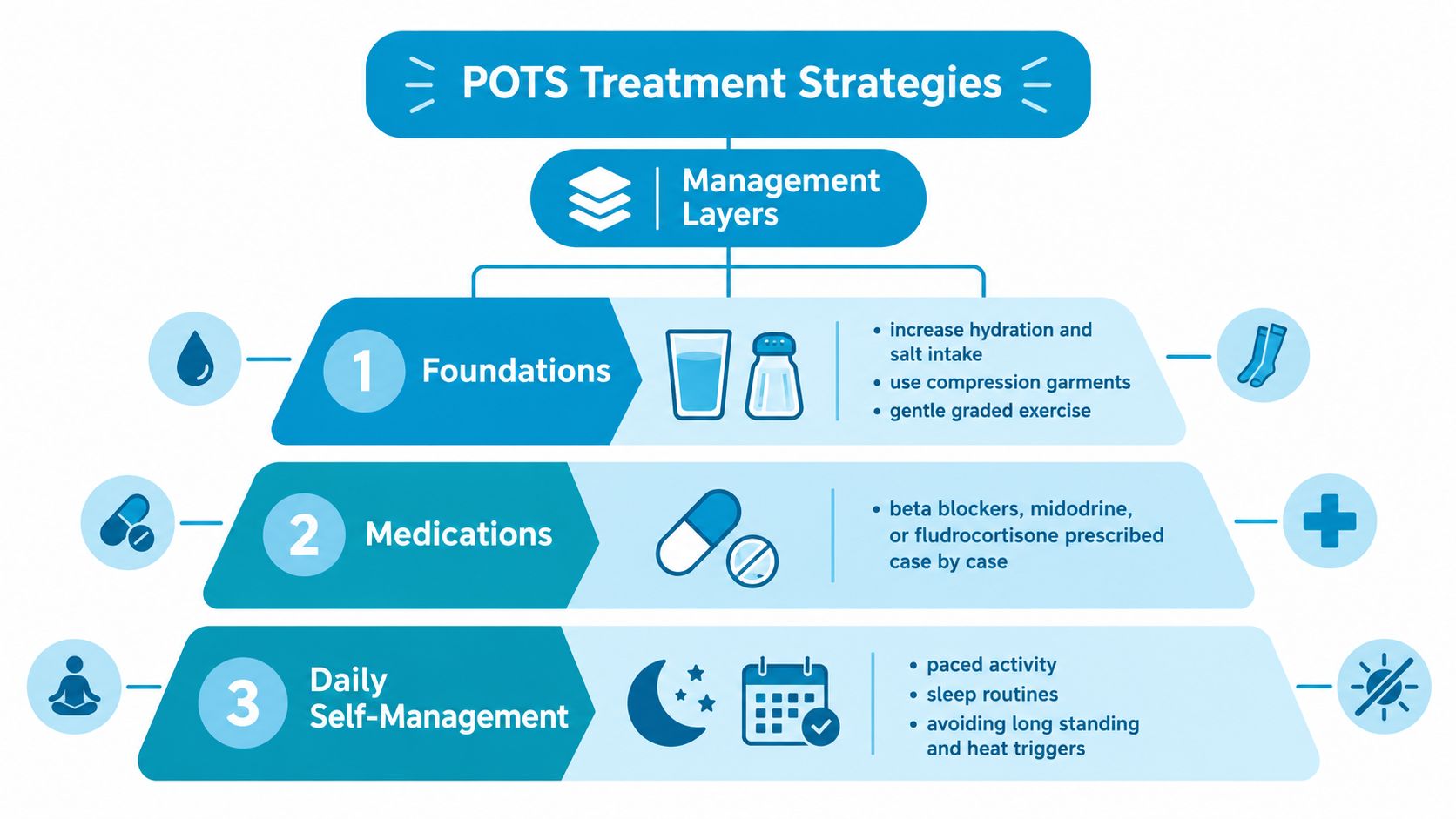
Daily adjustments can matter too. Sitting for tasks, avoiding prolonged standing and excessive heat, changing position slowly, and planning rest around predictable triggers may reduce the number of difficult episodes. These strategies don't eliminate the need for evaluation, but they can make symptom patterns easier to interpret.
Medication is individualized
Clinicians may consider medications such as beta-blockers, midodrine, or pyridostigmine, depending on heart-rate behavior, blood-pressure findings, pooling, fatigue, gastrointestinal symptoms, and other factors. Medication selection should be monitored because a treatment that helps one symptom cluster may worsen another.
The evidence doesn't yet support a universal first-line medication. A 2026 systematic review covering 21 randomized trials and 750 patients concluded that many small studies exist, but larger randomized trials are still needed to determine whether beta-blockers, midodrine, and pyridostigmine should be first-line therapies. The review also noted possible benefit from compression garments, salt supplementation, physical training, and transdermal vagal nerve stimulation. A related review found that tVNS reduced orthostatic tachycardia and improved autonomic indices. See the 2026 systematic review of POTS treatments.
The most practical treatment question is not “What treats POTS?” It's “Which intervention matches this person's physiology and symptoms, and what change will we measure?” Tracking standing tolerance, episode frequency, fatigue, dizziness, and medication effects gives that question a usable answer.
How Heart-Rate Tracking Helps Diagnose and Monitor POTS
A generic heart-rate graph can show that your pulse rose. It usually can't explain whether you were standing, exercising, recovering from exercise, dehydrated, ill, or already symptomatic. That context determines whether a rise is clinically useful.
Criterion-aware monitoring asks more specific questions. Did the heart rate rise from a resting or lying baseline after you became upright? How large was the change? Did it stay high? When did it happen, and what symptoms accompanied it? Those details are closer to the way clinicians evaluate orthostatic tachycardia than a list of daily maximums.
Generic tracking versus structured evidence
| Generic heart-rate history | Criterion-aware monitoring |
|---|---|
| Shows peaks and averages | Connects baseline, peak, timing, and duration |
| Mixes exercise with ordinary activity | Filters exercise and recovery from orthostatic episodes |
| Relies heavily on memory | Links symptoms and triggers to timestamps |
| Requires interpretation from scattered graphs | Produces a concise trend that can support an appointment |
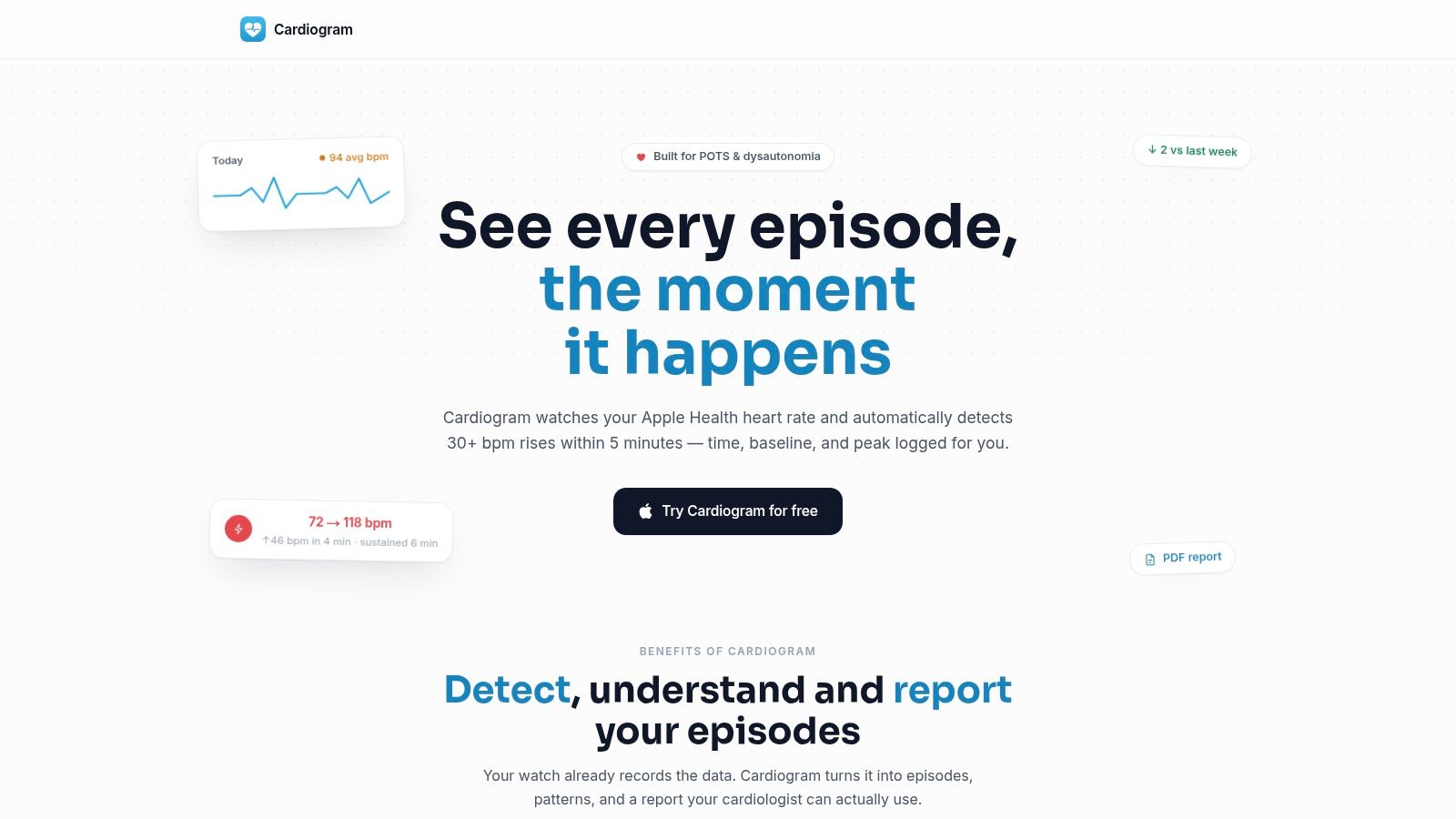
Automatic detection can identify meaningful rises within a defined standing window, including the 30 beats-per-minute threshold used in adult POTS evaluation. That doesn't prove POTS, because a watch doesn't measure every clinical variable and may not know your exact posture. It does, however, help reveal patterns that manual pulse checks often miss.
What to record around an episode
The most useful log is brief enough to maintain. Note when you stood, what you felt, and whether a likely trigger was present. You might include:
- Symptoms: Dizziness, palpitations, fatigue, weakness, nausea, or brain fog.
- Context: Heat, illness, stress, sleep disruption, prolonged standing, or recent activity.
- Intake: Hydration and salt intake, if your clinician has recommended tracking them.
- Treatment: Medication timing and any noticeable change afterward.
- Recovery: Whether symptoms improved after sitting or lying down.
Over time, timestamps and weekly patterns can show whether episodes cluster in the morning, after meals, during heat exposure, or around specific routines. That information can guide a conversation about formal testing and treatment response without turning every heartbeat into a crisis.
Using Cardiogram with Apple Watch for Clinical Insights
If you already wear an Apple Watch, a practical monitoring routine can begin with the heart-rate history you've accumulated rather than with another sensor. Cardiogram reads Apple Health data and analyzes it for tachycardic episodes, then organizes the results into episode records, trends, and context that you can review before an appointment.
Set up the routine
Start by granting read-only HealthKit access and reviewing the available heart-rate history. The app can detect posture-related rises, record the baseline and peak, and show how long an episode remained high. It also excludes workouts and recovery periods from episode counts, which helps reduce exercise-related noise.
When symptoms occur, log them close to the event. Add dizziness, palpitations, fatigue, brain fog, hydration, salt intake, sleep, medication, or another relevant trigger. A symptom note attached to a timestamp is more useful than trying to reconstruct several weeks from memory.
Turn patterns into a clinician conversation
Weekly summaries, resting-heart-rate trends, and heatmaps can show when episodes occur and whether their frequency changes. An exportable PDF report can summarize the detection rule, episodes, trends, and logged context for a clinician. Bring the report as supporting information, not as a replacement for orthostatic vital signs, blood-pressure assessment, or medical testing.
Privacy also matters when you collect sensitive health data. Cardiogram processes analysis on the device, uses read-only HealthKit access, and syncs through the user's iCloud environment according to the publisher's stated product design. Review the permissions yourself and share reports only with people involved in your care.
Common Misconceptions and Practical Next Steps
POTS isn't just anxiety. Anxiety can cause a fast heart rate, and living with unexplained symptoms can understandably create anxiety. But a repeatable upright heart-rate response, associated symptoms, and improvement when recumbent deserve physiological evaluation rather than dismissal.
POTS isn't “too rare to consider.” Estimates vary, but the condition affects enough people to create a meaningful burden across primary care, cardiology, and autonomic clinics. Atypical age, sex, or background should prompt careful assessment, not automatic exclusion.
Intermittent symptoms still count. A normal day doesn't cancel a difficult day. Episodes can depend on posture, heat, illness, hydration, sleep, activity, or other circumstances, so a longitudinal record may be more informative than one calm appointment.
A sensible next-step plan
- Arrange medical assessment. Seek care for recurring upright dizziness, fainting or near-fainting, unexplained palpitations, chest symptoms, or severe exercise intolerance. Seek urgent help for severe or new chest pain, fainting with injury, marked breathing difficulty, or symptoms that feel immediately dangerous.
- Bring organized evidence. Record posture, symptoms, timing, heart-rate changes, and recovery. Include medications and relevant triggers.
- Ask about the workup. Ask how your clinician will assess orthostatic heart rate and blood pressure, and which tests are appropriate to rule out mimics.
- Use home monitoring carefully. A watch can reveal patterns and improve communication, but it cannot confirm POTS or replace clinical judgment.
- Track without obsessing. A short, consistent log is more useful than checking every pulse repeatedly. Focus on episodes and trends.
Cardiogram organizes Apple Watch heart-rate data into POTS-focused episodes, symptom context, trends, and clinician-ready PDF reports. If you want a structured way to prepare for an appointment and see how your upright symptoms relate to heart-rate patterns, visit Cardiogram and review the monitoring options.